


Welcome back to Asia Tech Review, your curated digest to keep up to date with tech news across Asia.
Hugging Face, OpenRouter, these two AI infrastructure platforms were just sold in deals that combined reach nearly $20 billion. Now Asia is seeing its own versions rising with UniPat, a startup created by a former Alibaba AI employee, linked with raising $300 million led by Alibaba itself. It may be Friday, but today’s newsletter is packed with deals across AI, a Grab rumour and more.
To keep up with our issues, follow us on LinkedIn or WhatsApp. Please do share Asia Tech Review with people you know who want to get smart about Asia tech.
For news as it happens, follow ATR Bulletin, our real-time news site that keeps you in the know.
Alibaba is getting into the AI infrastructure game with a former intern
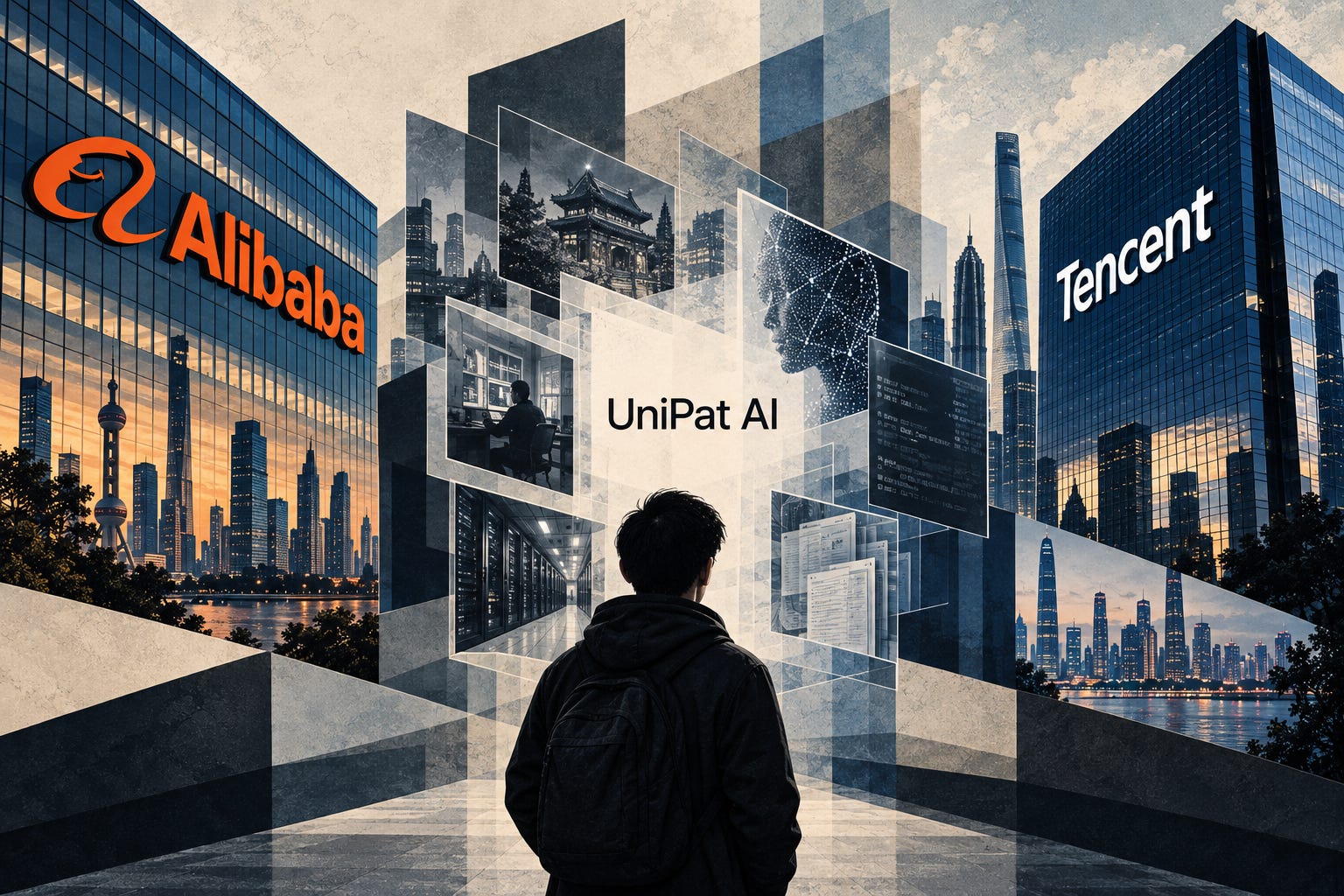
Deals around AI infrastructure are a major focus right now. Following Stripe’s $7.5 billion acquisition of OpenRouter and Nvidia’s $12.9 billion purchase of Hugging Face, Alibaba is making its own play. Bloomberg reports that the Chinese firm will lead a $300 million investment in training and benchmarking platform UniPat at a $2.5 billion valuation.
UniPat CEO Li Kuan is a former intern at Alibaba’s Tongyi AI division so there are already plenty of links between the two companies. But, more broadly, it’s clear that focus has moved into the infrastructure and platforms that underpin how AI is measured and trained.
Hugging Face and OpenRouter are very much along these lines. Both operate as central points through which users can easily switch between hundreds of AI models in an instant and with the same account and credit balance. Since they are repositories for the world’s top AI models, they generate vast attention and traffic which also makes them valuable.
UniPat isn’t exactly the same, but there are plenty of similarities, as Bloomberg explains:
Founded in late 2025, UniPat hosts benchmarks evaluating AI coding agents on software engineering tasks, browser agents executing everyday web actions, and frontier multimodal models on visual reasoning problems. Li’s research lab — with backing from Monolith and ByteDance Ltd.-backed Jinqiu Fund — also builds its own smaller models for purposes like prediction and scientific research.
Aside from a reliable read on the power of AI models, UniPat is also providing human-generated internet data, a resource that many companies training models are desperately seeking and struggling to find.
Alibaba has its highly-regarded Qwen open weight model, and it has invested significantly in bringing AI into its core business and enterprise customers as we’ve noted a number of times this year. There’s no doubt this platform is already useful to the company, but it makes sense that it would be even more interesting as Alibaba looks to extend its reach and touchpoints with potential customers and the wider community of AI users.
Alongside Alibaba, the speculated investors include Tencent and HSG, HongShan Group aka Sequoia China.
Indonesia’s Zankore secures $3.1 billion to build out Nvidia-powered AI data centre
On a related AI note, we don’t often see major companies coming out of Southeast Asia but Indonesia-based AI infrastructure platform Zankore, which is backed by Nvidia, just secured a $3.1 billion loan to purchase advanced chips.
That deal is one of the largest financings for a company of this type in Asia.
The money will go towards buying and deploying Nvidia GPUs (this is why Nvidia backs these companies) for a new AI factory that is planned to reach 1 gigawatt in capacity. Aside from Nvidia, Zankore is backed by Nokia, telco Indosat and its parent company Ooredoo.
We’ve written about the challenges of making sovereign AI, i.e. AI systems that are not reliant on international companies and products, a reality in Asia, and particularly Southeast Asia. A compromise of sorts looks to be having local infrastructure like Zankore as the data centre layer. That is just one part, of course, and the lack of local AI models remains an issue.

Grab eyes BNPL as the next leg of its fintech growth story
We know Grab is doubling down on its financial services business, as it finally bids to turn its fintech potential into clear growth, and now there’s a hint at what further direction that might take. Bloomberg reported that the ride-hailing firm is in talks to take a majority ownership stake in Atome Financial, the Singapore-headquartered buy-now-pay-later platform, in a deal that would value it at upwards of $2 billion.
Grab has more than $5 billion in cash to spend and, as we’ve said repeatedly, it will use that for strategic M&A. It made a series of investments in autonomous vehicle tech last year, acquired US-based investment platform Stash and it is moving into a new market with the $600 million purchase of Foodpanda Taiwan. Adding BNPL would complement its existing payments and lending push.
Disclosure: Atome is an Ellerton & Co. client. This item is based on Bloomberg reporting.
Deals
We ran out of space to analyse this fascinating deal, but TikTok will invest $980 million in a 50-year logistics project in Ho Chi Minh City, with its Tokgistic unit initially contributing $196 million before operations begin in November [TechNode]
Uber invested $10 million in Indian fleet-management startup Carrum Mobility at a $168 million valuation, up from $63 million when the US firm made an investment in January [TechCrunch]
Bengaluru-based QNu Labs raised Rs 200 crore ($21 million) in a round led by India’s National Quantum Mission and Speciale Invest, taking its total funding to Rs 375 crore ($39 million) as it develops quantum-safe cybersecurity [Economic Times]
South Korean AI startup Upstage is considering a pre-IPO funding round as it seeks capital for its hardware-intensive AI push, after raising 560 billion won ($420 million) in its Series C this year [Bloomberg]
Abu Dhabi’s Mubadala invested in China’s Luckin Coffee as part of a $1 billion transaction with controlling shareholder Centurium Capital [FT]
Markets
Chinese regulators are tightening approval standards for humanoid-robot IPOs after Unitree Robotics’ volatile debut, requiring startups to show recurring revenue, narrowing losses or genuine technological innovation [The Information]
Investors are paying steep fees for access to special-purpose vehicles holding DeepSeek stakes, pushing the Chinese AI lab’s implied valuation to about $71 billion from $52 billion a month earlier despite five-year lock-ups and no voting rights [FT]
Moonshot AI is considering a Hong Kong IPO followed by a Shanghai Star Market listing as the Kimi maker looks to raise capital and broaden its investor base [SCMP]
AI and Chips
The US (has again) accused six Chinese AI companies including DeepSeek, Moonshot AI and Alibaba of using distillation to copy American models [Reuters]
In more detail: Anthropic itself directly accused Chinese AI labs DeepSeek, Xiaomi and Moonshot of using Claude conversations to train their own models [Anthropic]
DeepSeek released V4.1 Flash, a 552-billion-parameter model that it says is faster and cheaper to run than its previous flagship [SCMP]
Samsung Electronics opened a 6,600-square-metre advanced-chip-packaging research centre in Yokohama [Nikkei Asia]
Malaysia faces a 9-gigawatt gas-fired power shortfall by 2032 as data centres consume more electricity, with their share of demand reaching a record 9.3% in August [Reuters]
Underemployed Chinese lawyers, architects and engineers are said to be taking low-paid gig work training AI models in specialist fields as the country’s weak economy squeezes incomes [Rest of World]
China’s AI chipmakers, including Huawei and Cambricon, are raising prices as high-bandwidth-memory costs rise, with Huawei’s Ascend 950DT accelerator now quoted at more than 250,000 yuan ($37,255) [Reuters]
Crypto
Citigroup plans to offer Japanese companies instant overseas remittances using blockchain-based tokenised deposits as early as this year, including transfers outside banking hours [Nikkei Asia]
Singaporean Malone Lam pleaded guilty in the US to helping steal and launder $245 million in Bitcoin, one of the largest cryptocurrency thefts on record [BBC]
India plans to push BRICS members to use central bank digital currencies for cross-border trade settlements while opposing a bloc-wide payments network that could challenge the dollar [Bloomberg]
Policy
Tokyo’s Shinjuku ward plans to ban Airbnb-style short-term rentals in residential areas and near schools and cultural sites as complaints about tourist behaviour fuel a backlash against overtourism [The Guardian]
India’s Serious Fraud Office recommended an investigation into Xiaomi over alleged irregularities in its business model and compliance with foreign-investment laws [Reuters]
The US Treasury sanctioned Xinbi Guarantee, a Chinese-language Telegram marketplace accused of facilitating cyber scams, money laundering and human trafficking, and seized $52.8 million from 52 crypto wallets [The Record]
In other news:
Flipkart and Amazon are expanding into quick commerce, streaming video, microdramas and food delivery as their combined share of India’s monthly active users fell from 67% in 2022 to 53% in August [Economic Times]
Indeed, Flipkart launched a standalone app for its Minutes quick-commerce service and began piloting food delivery in Bengaluru ahead of October’s Big Billion Days sale [Economic Times]
At least four cyber-espionage groups, most linked to Chinese state intelligence, have exploited a previously unknown Chrome vulnerability since late August, targeting US defence contractors, NGOs and Southeast Asian governments [The Record]
Ant International, Mastercard and Visa are developing common standards to verify AI agents that can make purchases for users, creating a framework that payment networks and platforms can use to recognise trusted agents [Reuters]
For news as it happens, follow ATR Bulletin, our real-time news site that keeps you in the know.