


Welcome back to Asia Tech Review, your curated digest to keep up to date with tech news across Asia.
Today we look at how the companies behind two red hot AI stocks are capitalising on their surge with new offerings. SK Hynix is Korea’s highest valued company alongside the venerable institution that is Samsung, and China’s Zhipu has become a breakout AI star that’s valued at more than $100 billion despite being best known for open source models.
To keep up with our issues, follow us on LinkedIn or WhatsApp. Please do share Asia Tech Review with people you know who want to get smart about Asia tech.
Zhipu plans to raise billions more to capitalise on hot streak
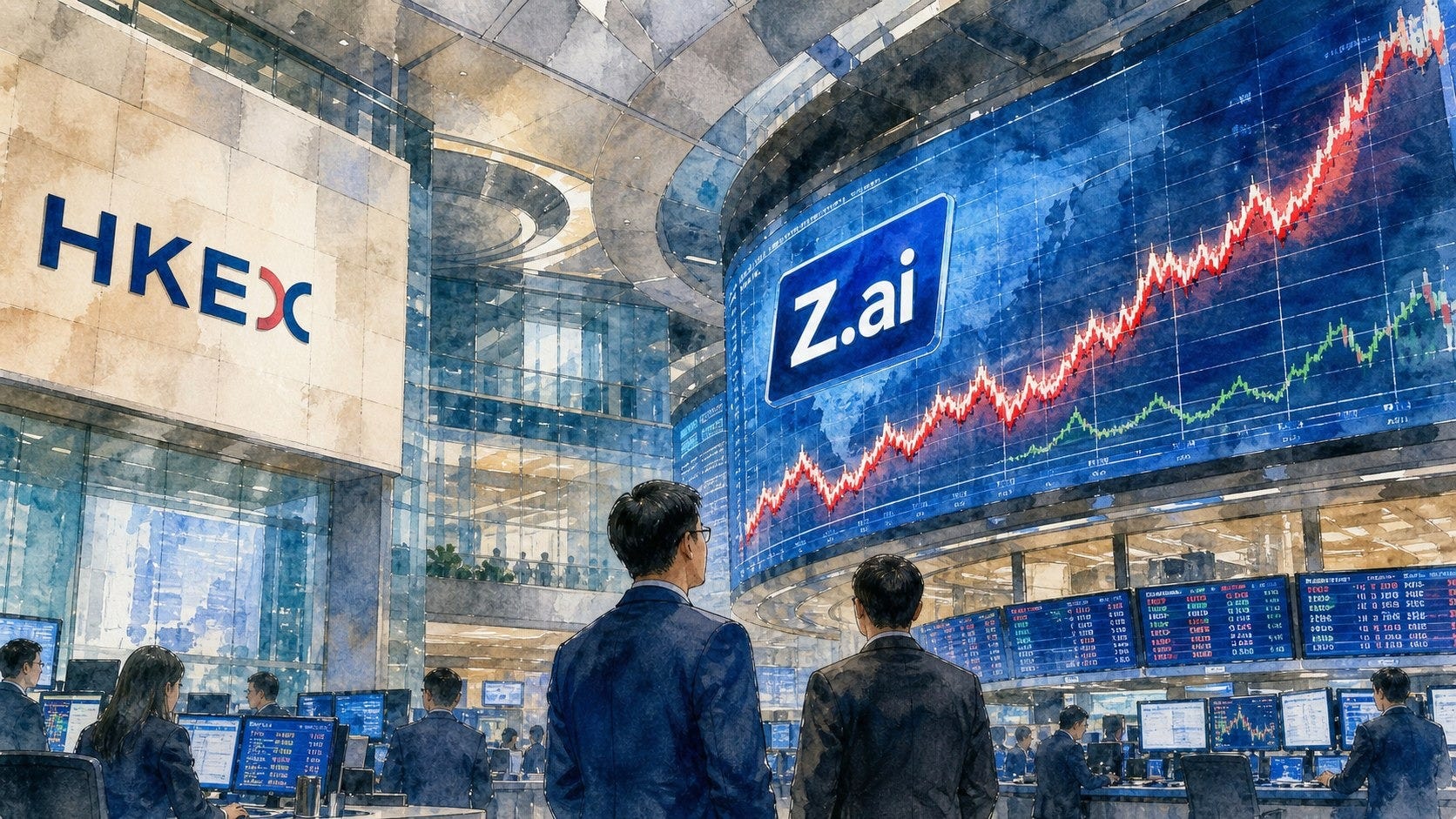
Zhipu, the company behind the Z.ai chatbot and GLM AI models, is a headscratcher.
On the one hand, GLM is incredibly highly rated. Its newest 5.2 model was proclaimed as “the step change for open agents” by Nathan Lambert, an AI scientist with the Allen Institute and well-read newsletter author. Beyond agents, it has won acclaim for its coding ability, with praise from Elon Musk, and it consistently outranks most of the industry in benchmark tests.


GLM 5.2 appeared at just the right time. Right when Anthropic withdrew its newest Fable/Mythos models in an unprecedented move that brought the issue of sovereign AI, and dangers of relying on US products, into the broader agenda.
“At a time when some frontier models can suddenly become unavailable, we choose to believe in a different path. Frontier intelligence should not belong to only a few people, nor be subject to withdrawal by a handful of rules at any moment,” Zhipu said via social media.
Since that Anthropic moment, there’s been a noticeable shift in the narrative towards free weight models that can be hosted and trained locally, rather than through the cloud. But, and this is the confusing counter, open source models don’t equal revenue. Zhipu may have great models that are capable of rivaling the best in the world, but if I don’t have to pay for it, how does this whole thing work?!
Then finally, because all good things come in threes, you have its stock price.
The company went public in Hong Kong at the end of last year alongside rival MiniMax in what were the world’s first AI IPOs, and its share price is up more than 2,200% so far this year. That gives it a valuation of just over 1 trillion HKD ($128 billion) but yet its annual revenue in 2025 was just $105 million. The company lost 4.72 billion RMB ($695 million) last year.
Now, Zhipu is reportedly cashing in on its surge with Bloomberg reporting it is planning a multi-billion dollar share sale. That comes as rivals fuel up on capital as investor appetite for Chinese tech grows. Moonshot AI, which produces the Kimi models, is said to be raising at least $1 billion before going public, while DeepSeek reportedly closed more than $7 billion in new funding.
There are concerns that Chinese AI companies are far behind Anthropic and OpenAI when it comes to revenue generation and profitability. Zhipu is trying to strike a balance and narrow the gap by releasing open source models that gain attention for their quality, whilst simultaneously increasing the price of its subscriptions and API-based products.
It raised API-based pricing by 10% in April in what was its second price increase of the year, and its models are embedded in a range of popular services that include Notion and Cloudflare. We expect to see more partners and customers in the US and beyond as companies increasingly look for alternates or hedges to Anthropic, and Zhipu has more money to play with.
SK Hynix confirms US IPO that could raise $29 billion
It’s official, SK Hynix will go public on the Nasdaq after the Korean memory tech specialist confirmed plans for a US IPO.
SK Hynix has had a whirlwind year. We wrote about its record Q1 earnings back in April and that’s driven its stock price to all-time highs, which include overtaking Samsung as Korea’s most valuable company:
These numbers are wild. The company posted $35.55 billion in revenue for Q1 2026. That’s the highest for any single quarter in its history and a staggering increase of nearly 3X year-on-year. SK Hynix also saw operating profit increase five-fold to reach $27.9 billion. Operating margin hit a new record of 72%.
ATR Daily: SK Hynix posts record profits as AI boom drives valuation toward $600B
Bloomberg reports that the IPO will raise around 45.45 trillion won ($29.4 billion) and that it could begin trading on 10 July, in just over two weeks time. A float of that size would make the IPO one of the top five in history, equaling Saudi Arabian oil giant Aramco’s huge 2019 listing which raised $29.4 billion at the time.
SK Hynix shares have risen by more than 300% this year, giving it a market capitalisation of 2,017 trillion KRW, that’s around $1.3 trillion. Confirmation of these US plans gave it another 10% boost. Alongside the growth of Samsung’s own share price, the duo have pushed the value of Korea’s stock market to seventh in the world.
But there are concerns around the sustainability of the stocks as retail investors have increasingly used borrowed money to buy up the shares and grab a piece of the rocketship that everyone in the country is talking about. Nikkei Asia reports that credit from brokers to retail traders (margin balances) jumped by more than 60% this year so far. That’s huge but it doesn’t include borrowing from banks, credit companies and others.
The potential impact of market ‘corrections’ (aka share price slumps) from automatic selling on leveraged trades could spell trouble. SK Hynix shares can be volatile, and its movement has triggered circuit breakers on the KOSPI. Just this week, the exchange’s value fell 10% following those concerns on SK Hynix ETFs trading.
Adding liquidity from the US may help balance the concentration on Korean trading, and of course give SK Hynix access to more capital. It also makes sense given its huge US plans:
SK Hynix is already planning to launch a US business to capitalise on AI demand by “delivering optimized AI systems for its customers in the AI datacenter sector.” That venture will be backed by $10 billion in capital, and we are likely to learn more as the year plays out.
ATR Daily: SK Hynix posts record profits as AI boom drives valuation toward $600B
Walmart and Amazon double down on Indian quick-commerce
Walmart-backed Flipkart says its Minutes quick-commerce service has reached 1,000 micro-fulfillment centers across India less than two years after launch—it plans to scale to 1,500 by the end of 2026 [TechCrunch]
Amazon CEO Andy Jassy is visiting India, weeks after a big report about how the US firm is struggling in the country, as Amazon expands its quick-commerce service (Amazon Now) to 200 new cities to reach a total of 300. Jassy will reportedly also meet PM Modi during his time in India. [Bloomberg]
Reuters has a deeper look at how Walmart/Flipkart and Amazon are chasing younger rivals for a slice of an $11 billion sector that home delivers everything from iPhones to milk within 10 to 30 minutes from neighbourhood warehouses [Reuters]
Deals
Bengaluru-based customer engagement platform MoEngage is betting on AI agents by acquiring San Francisco AI startup Aampe in an all-cash deal said to be worth tens of millions of dollars [TechCrunch]
ByteDance is reportedly in early talks with banks for a $20 billion offshore loan, its largest yet, which will go towards AI spending [Bloomberg]
Blackstone plans to invest $30 billion in AI data centers in Japan over the next three to five years [Nikkei Asia]
Philippine billionaire Lance Gokongwei is buying a 15% stake in online gaming technology firm PhilWeb for 2.03 billion pesos, or $33 million. PhilWeb shares rose 8% on the deal, which will see the company invest in AI-related opportunities. [Bloomberg]
Markets
Lingyi iTech raised HK$8.3 billion ($1.1 billion) in a Hong Kong listing priced at the top of its range [Bloomberg]
Chinese electronics manufacturer Luxshare Precision, which works with Apple and others, is said to be sounding out investors for a Hong Kong IPO that could raise around $3 billion [Bloomberg]
AI and Chips
Anthropic has accused Alibaba’s Qwen AI lab of orchestrating its largest-ever documented attempt by a Chinese company to exploit a US AI developer’s models, using nearly 25,000 fraudulent accounts to conduct 28.8 million exchanges with Claude between April and June [Bloomberg]
ByteDance is preparing to launch Seedance 2.5, an AI video model that will generate clips of up to 30 seconds using as many as 50 reference materials [The Information]
China’s 360 Security Technology claims it has developed a domestic equivalent to Anthropic’s Mythos, framing the US AI vulnerability-hunting system as a strategic capability Beijing cannot afford to leave in foreign hands alone. [Reuters]
Qualcomm is in talks to design custom chips for ByteDance as it expands beyond its dominant smartphone business model [Reuters]
Tencent is rolling out an AI agent called Dayuan on WeCom, its enterprise messaging platform, using DeepSeek’s latest V4 model [Bloomberg]
Black market prices for Nvidia’s flagship AI chips in China have more than doubled over the past six months as US export controls tighten and domestic demand surges [Financial Times]
In other news:
We wrote about VinFast’s Green SM’s India entry last month, and the company continues to expand its footprint after it launched in Kazakhstan [Nikkei Asia]
The US Justice Department seized a cloud computing account used by subsidiaries of Cambodia’s Huione Group, a conglomerate cut off from the American financial system last year over alleged ties to investment scams, money laundering, and human trafficking [The Record]
Alibaba sued the Pentagon to remove it from a blacklist linking the Chinese e-commerce giant to the People’s Liberation Army [Bloomberg]
Rakuten will launch a satellite joint venture with AST SpaceMobile in Japan this year to provide direct-to-mobile communications, rivaling Japan’s three larger carriers that use SpaceX technology [Nikkei Asia]
Masayoshi Son plans to stay at the helm of SoftBank for at least another decade, by which time he’ll be 78 years old [Bloomberg]
Malaysia plans to release a national roadmap for its commercial drone and air taxi sector by year-end [Nikkei Asia]
WhatsApp just appointed Kunal Shah as its CEO, and new reports show India contributes more than half of its global revenue, with more than $1 billion coming from the country per year [Moneycontrol]