


Welcome back to Asia Tech Review, your curated digest to keep up to date with tech news across Asia.
We’re inundated with AI models, open weight releases and other software from US or Chinese companies, but we hear little from those in the rest of Asia. But top Indian fintech Razorpay bucked that trend by releasing a payment model that leans on its experience as the country’s top payment processor. We dive into what and why, and the timing. We also recap China’s new blockbuster IPO and the rest of the news.
To keep up with our issues, follow us on LinkedIn or WhatsApp. Please do share Asia Tech Review with people you know who want to get smart about Asia tech.
And check out Asia Tech Review Bulletin, a real-time news feed for Asia’s technology industry for those who are as obsessive about the news as we are.
Razorpay launches foundational model to make India’s payments smoother
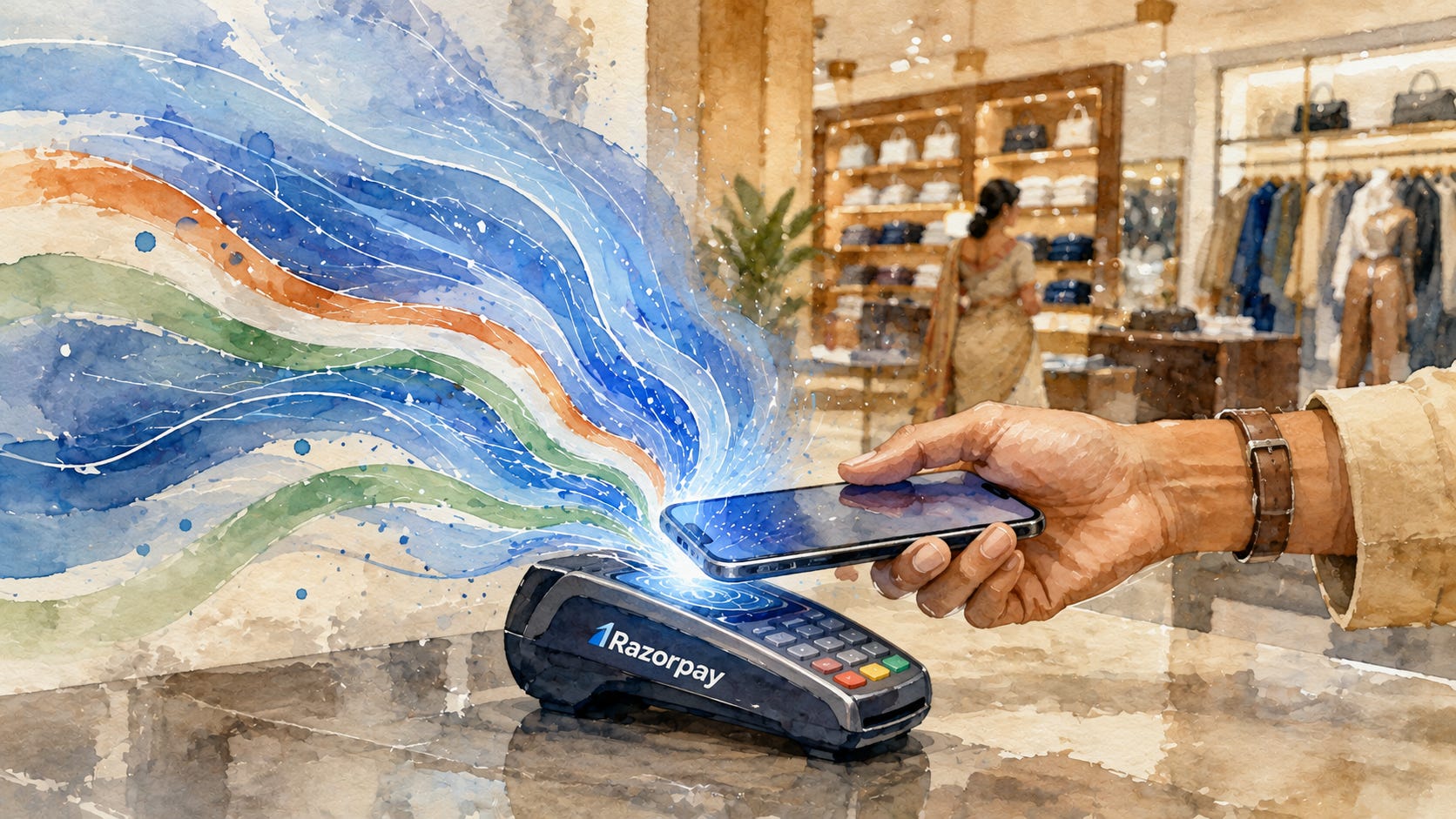
AI model development isn’t typically heard about in Asian markets outside of China, but Indian fintech Razorpay has stepped up to the mark by launching an AI foundational model for payments.
The model is called Vulcan and it is designed to enable financial institutions to detect fraud, improve payment routing, make risk assessment more accurate and improve checkout personalisation. That’s promising given the company’s position as a payment gateway which processes $180 billion in annualised TPV, total payment volume.
The main details released so far are that Vulcan can help generate 8-10% higher payment success rate, and that it can detect eight times more international fraud. Razorpay claims it has been trained on more than 3 trillion data points that include more than just transactions. For transactions alone, it learns from around 3,000 signals. These numbers all feel fairly subjective, but you can’t really release an AI model without some numbers to quantify its utility.
“Like large data models can understand text, this model understands the complex language of money movement in India,” said Harshil Mathur, Razorpay CEO and co-founder, in a launch video.
Now technically Vulcan isn’t an LLM. It’s a transformer. (Yes, there’s a difference.) But essentially Vulcan helps other companies use some of the infrastructure that Razorpay has in place, and by offering it openly, additional inputs and data can refine it further to make it more useful. That’s the goal at least.
It’s not initially spanning all areas of business. “Razorpay said it eventually intends to extend the model across more payment decisions, including authentication, routing, fraud detection and lending,” according to Analytics India Magazine.
Razorpay has done a fair amount of work around AI this year, despite the Indian ecosystem not jumping into open source and general development as we might expect. It added agentic payments to Claude and Codex, introduced agents for business partners in June and was an early partner for Sarvam, the India-built AI model. But releasing its own material, it is upping its game further.
That’s well timed given the company has reportedly filed for an IPO at a valuation that could reach $6 billion. AI is the theme of the year for the public markets, so there’s no doubt that beefing up your AI capabilities and narrative is good for business.
Elsewhere in India AI news, a startup called Murf AI launched a text-to-speech model that it claims beats products from market leaders OpenAI and ElevenLabs on performance and cost. And US AI firm Perplexity revealed its free deal with operator Airtel generated 56 million downloads in the first seven months. There’s still five more to go but this is the first quantifiable data point from the rush of free promos that AI companies rolled out in India.
Unitree keeps China’s blockbuster IPO run going
First it was CXMT, now Unitree is the newest Chinese AI stock to see its price surge right after listing.
Unitree raised 6.1 billion yuan ($905 million) when it went public on Shanghai’s STAR board for tech IPOs yesterday. The firm’s share price closed the day up more than 450%, but before a late pullback the company’s valuation reached $66 billion. A story on links between Unitree and the US army, published on the eve of its listing, didn’t suppress the appetite for its stock.
Just weeks ago, memory maker CXMT’s share price surged over 500% after it, too, listed on STAR with an IPO that raised a colossal $8.6 billion. That pump saw the company, which is the world’s fourth largest memory provider, overtake Tencent as China’s highest valued business with a market cap of nearly $590 billion.
We’ve written plenty about China’s push for tech self sufficiency and the growth of its IPO destinations, in particular the STAR board (launched in 2019) and the revamped Hong Kong Stock Exchange. These two examples show how the two are coming together.
These two companies are standouts, for sure, but there’s more to come. Robotera, a robotics startup backed by HSG among others, is reportedly planning to raise as much as $1 billion through an IPO in Hong Kong.
Deals
HSG, the venture capital firm formerly known as Sequoia China, is seeking at least $1.2 billion for its first dollar-denominated fund since splitting from its US counterpart, as it weighs a growth fund and a yuan vehicle alongside the raise [Bloomberg]
Indian HR software startup Darwinbox is attracting acquisition interest from Salesforce, Microsoft and ADP while exploring a potential IPO, giving the KKR-backed company options after its last valuation of about $1 billion [Livemint]
Indian fintech Navi has raised $100 million from Prosus in its first institutional funding round, valuing the Sachin Bansal-founded startup at about $1.3 billion after earlier seeking external capital at roughly $2 billion [TechCrunch]
Markets
SoftBank is preparing a record 1 trillion yen ($6.3 billion) retail bond sale in Japan to fund its AI push, in what would be the largest bond issue aimed at individual investors by a Japanese company [Nikkei Asia]
Shein is targeting a valuation of about $25 billion to $28 billion for its Hong Kong IPO, a steep comedown from the nearly $100 billion valuation the fast-fashion company commanded four years ago [Reuters]
SK Hynix will buy back and cancel 40 trillion won ($28.6 billion) of treasury shares and put more than half of its free cash flow between 2025 and 2027 toward shareholder returns [Reuters]
AI and Chips
Alipay has launched China’s first full-stack agentic commerce platform, giving merchants tools to turn web pages, products and workflows into AI agent-ready services [TechNode]
Alibaba released a beta version of HappyShrimp 1.0, an AI music model that can generate lyrics, vocals, melodies and arrangements from a single text prompt [Bloomberg]
South Korea has narrowed its sovereign AI contest to LG AI Research, SK Telecom and Upstage after eliminating a team led by Motif Technologies, with two winners set to be chosen next year [Bloomberg]
China is trying to reshape the data behind AI by building high-quality datasets across more than two dozen strategic industries by 2028, part of Beijing’s push to reduce reliance on English-language training data and Western systems [NYT]
CXMT’s rise past Tencent as China’s most valuable company captures the shift from the internet giants of the mobile era to AI and semiconductor champions at the centre of Beijing’s self-sufficiency drive [Bloomberg]
Pakistan launched its first state-backed data centre for critical national data, a $90 million AI-ready facility built with technology from China’s ZTE that is stirring questions about digital sovereignty [Nikkei Asia]
China has allowed small batches of Nvidia H200 chips into the mainland, with ByteDance and Tencent each receiving about 10,000 processors as Beijing balances support for national AI champions with its domestic chip agenda [FT]
Z.ai launched its GLM-5.3 model on OpenRouter at $0.60 per million input tokens and $1.92 per million output tokens, pitching it as a lower-cost option for coding, cybersecurity and long-horizon agent work [OpenRouter]
Samsung raised prices for some advanced contract chipmaking services by up to 15% for new orders as demand for AI chips, especially from China, strains foundry capacity [Reuters]
ByteDance and the Motion Picture Association agreed a framework to protect film and TV intellectual property across the Chinese company’s AI generation tools after Hollywood studios accused Seedance of enabling copyright infringement [Variety]
Policy
Indonesia expanded Kartu Kredit Indonesia, its domestic credit card network, to consumers as it tries to reduce Visa and Mastercard’s grip on card payments [Nikkei Asia]
Singapore will require WhatsApp, Telegram and other large messaging services to make it harder for unknown contacts to reach users, while major social platforms face new duties to detect and remove scam ads [CNA]
China ordered some state-linked entities to remove a government-approved version of Microsoft’s Windows 10 months ahead of schedule, accelerating Beijing’s push to reduce reliance on foreign technology [Bloomberg]
China accused the European Union of overreach in its review of JD.com’s €2.2 billion acquisition of German electronics retailer Ceconomy, blocking compliance with information requests it says amount to extraterritorial jurisdiction [Bloomberg]
Earnings
Baidu missed second-quarter revenue estimates as a 19% drop in online advertising outweighed growth in its AI cloud business, with revenue falling 4% to 31.33 billion yuan ($4.65 billion) [Reuters]
Xiaomi reported better-than-expected quarterly profit despite a memory chip shortage that has lifted component costs, with net income down 21% to 9.46 billion yuan ($1.4 billion) as its electric vehicle push keeps pressuring earnings [Bloomberg]
Pony.ai said it has a pipeline of more than 4,000 planned and potential overseas robotaxi deployments, while second-quarter revenue rose 68.8% year-on-year to $36.2 million [Reuters]
In other news:
Google plans to move production of all Pixel smartphones, smartwatches and wireless earbuds out of China next year as it accelerates efforts to reduce manufacturing exposure to the country [Nikkei Asia]
Japanese animation giant Studio Ghibli is entering a new chapter under Nippon Television ownership as Hayao Miyazaki, now in his mid-80s, continues to shape the studio’s future [Bloomberg]
TikTok is exploring peer-to-peer payments through direct messages, extending the platform’s financial-services push with a feature that would reportedly use TikTok Pay in Southeast Asia [Bloomberg]
Tencent Cloud will launch its first cloud region in Malaysia with up to three availability zones in Johor, alongside plans to train more than 1,000 people in AI and cloud computing [The Edge Malaysia]
Uber India partnered with travel platform ixigo to add train ticket booking to move beyond ride-hailing into broader intercity travel [Entrackr]
Nokia plans to cut most of its mainland China workforce and close sites by the end of the year, marking a sharp retreat after more than four decades in the country [SCMP]
Binance provided Russian authorities with data on crypto donations to Ukrainian fundraising campaigns, material later used in a terrorism financing case against a Russian IT specialist despite the exchange’s claim that it had fully exited Russia [Reuters]