


Welcome back to Asia Tech Review, your curated digest to keep up to date with tech news across Asia.
ATR is a daily newsletter, but we have switched to three times a week for the summer and while I’m in Europe. Despite that, the news has come thick and fast this week. Today, we’re contrasting the growth of CXMT and China’s domestic AI players with the volatility of Korea’s winners. We plan to be back on Friday with an issue looking more specifically at what’s happened in Southeast Asia this week so stay tuned.
To keep up with our issues, follow us on LinkedIn or WhatsApp. Please do share Asia Tech Review with people you know who want to get smart about Asia tech.
Outside of Asia Tech Review, I run Fully Drafted, a communications and consulting company focused on traditional comms, thought leadership and investor relations. Get in touch if you think we can help you.
China’s CXMT surges as Korea’s AI chip champions stumble
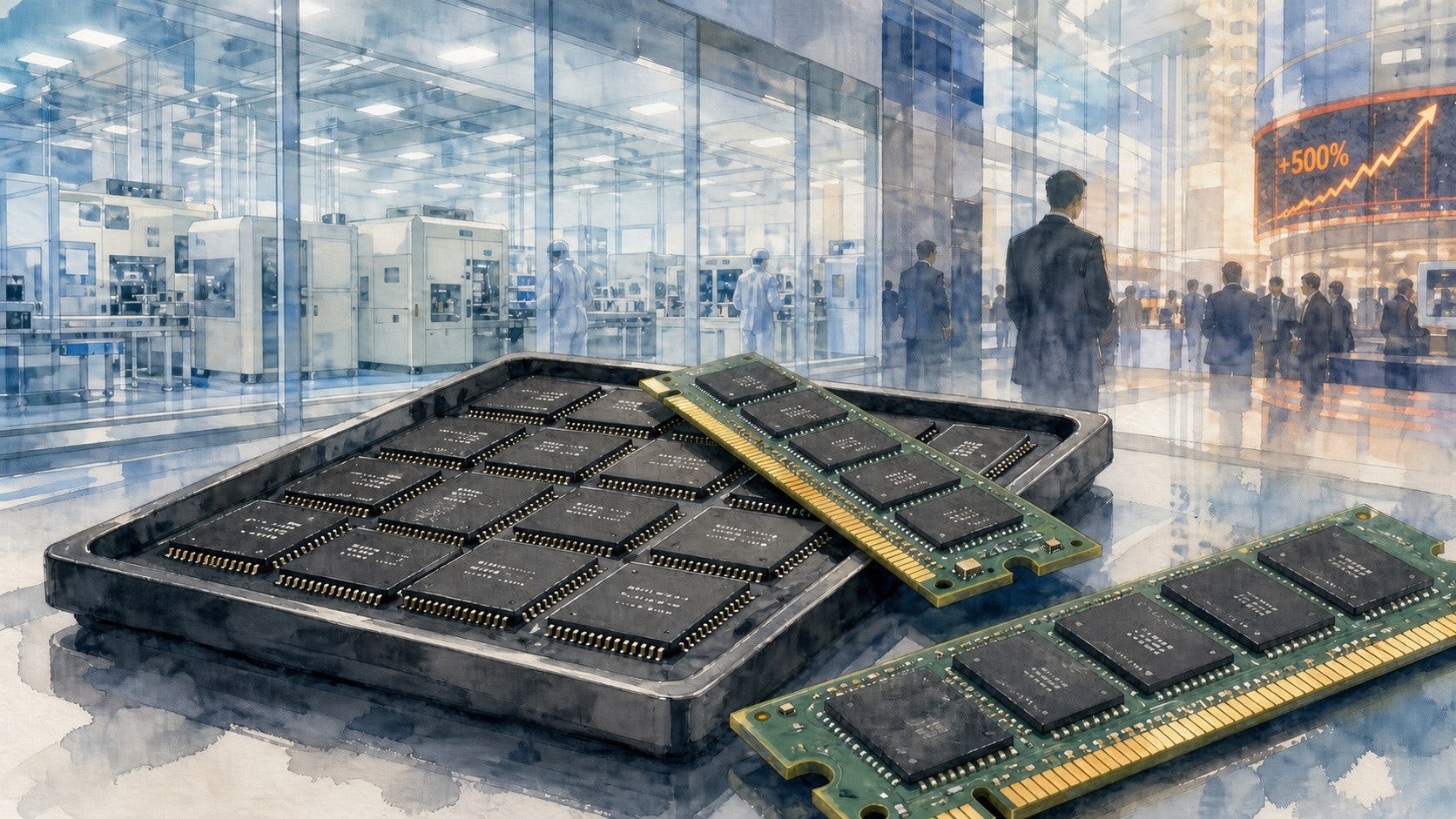
A week is a long time in the world of AI stocks. In the space of just days, memory maker CXMT went public and became China’s most valuable stock and SK Hynix, the memory king that’s become akin to a GameStop meme stock, has cratered by 25%.
CXMT’s (ChangXin Technology Group) market debut was a moment of history. The company raised 57.92 billion yuan ($8.6 billion) and its stock jumped nearly 500% on its Shanghai STAR Market debut to become China’s most valuable company. The IPO is the country’s largest since Agricultural Bank of China raised $22 billion in 2010.
Regular readers know CXMT is the world’s fourth-largest producer of DRAM memory, which is crucial to electronics. It is one of the key component makers as China builds out its own self-sufficient ecosystem for AI, right from models to chips, cloud, data centres and more.
CXMT’s timing was ripe given that AI-related stocks surged in the first half of 2026. Zhipu and MiniMax enjoyed stellar debuts in Hong Kong as the world’s first AI stocks to go public, while SK Hynix and Samsung are flying with record profits. Added to that, China is being acknowledged as the disruptor in world AI order thanks to Kimi from Moonshot, DeepSeek and more. CXMT combined those two tailwinds to create a monster IPO.
The stock might look pricey for now, but it has created billions in profits for its backers, which include Alibaba and at least five state-owned banks. The returns were so high that its chairman’s net worth rose past $15 billion, while he pledged to give more than $5 billion of the sum back to employees. (Alibaba made around $464 million, or 20X, on its investment, one of a series of big returns from its AI deals.)
In contrast, South Korean stocks plunged on concerns of China’s threat. The KOSPI rose with the gains of SK Hynix and Samsung but it closed down 6%, marking an 18% fall over five days of trading.
There were always concerns about the volatility of AI stocks. We noted last month that credit from brokers to retail traders rose by more than 60% this year. Now, Korea has clamped down on retail access to leveraged exchange-traded funds (ETFs) which were hit hardest by these drops. Singapore’s MAS is among those raising concern around the broader potential economic impact of AI stock fatigue.
The situation wasn’t helped by SK Hynix missing its earnings estimates this week.
That’s despite yet another set of impressive results, including 557% growth in operating revenue which hit a record 60.54 trillion KRW ($42 billion). Our friend Tim Culpan at Culpium has a deeper look at exactly what happened.
The volatile stock crashes didn’t come out of thin air and CXMT’s listing has been coming for some time. We first noted it back in 2023 and again in January of this year as the plans gathered momentum. So neither event was unexpected and they don’t usher in a drastic new period of world order. In both cases, the writing was on the wall, and that’s exactly why we follow developments closely in ATR.
For more on CXMT, SCMP has a profile of its chairman, Zhu Yiming.
Deals
Moonshot AI closed a $3.5 billion round at a $35 billion valuation, exceeding its original $1-2 billion target thanks to the impact of its Kimi K3 model. Now it is said to be planning a new round at a $50 billion valuation before a Hong Kong IPO [Bloomberg]
In more news: Moonshot is said to be figuring out how to get its hands on more Nvidia Blackwell chips, which are banned on US export rules, in order to develop its next Kimi K4 model. That’s despite China’s self-sufficiency strategy becoming more sophisticated and wide-ranging [The Information]
Vantage Data Centers is considering selling its Malaysia business for about $2 billion as investors chase AI-driven data centre assets in Southeast Asia [Bloomberg]
AirTrunk secured a $2.3 billion green loan for a Malaysia data centre, adding more financing to Southeast Asia’s AI infrastructure buildout [Bloomberg]
Sixth Street, SK Telecom, GIC and La Caisse are bidding for a major stake in Bain-owned Southeast Asian data centre firm Bridge [Bloomberg]
Zomato founder Deepinder Goyal is targeting a $500 million valuation for his new startup Temple, which is preparing to debut its wearable at Rs 80,000, or about $930 [Economic Times]
SoftBank is eyeing a deal to buy a former Sony payments company as it looks to strengthen its settlements business, extending the Japanese group’s push deeper into fintech infrastructure and digital payments [Nikkei Asia]
SoftBank’s $40 billion loan backing its OpenAI stake has added 21 new lenders, broadening the financing base behind Masayoshi Son’s biggest AI bet as the Japanese group keeps pushing deeper into frontier AI infrastructure and investment [Bloomberg]
Markets
Shein is about to go public, and its pre-listing documents showed it lost $99 million during the first quarter despite net income of over $2 billion last year (Shein also disclosed it is being investigated by the FTC, but it did not give specifics) [Reuters]
Zepto has reportedly dropped its IPO valuation to $3 billion post-money to get the listing over the line, that’s despite a previous valuation of $7 billion and approval from SEBI to go public [Moneycontrol]
China’s DexForce is planning to be the latest robotics and AI firm to go public in Hong Kong [Bloomberg]
Japanese chipmaker Kioxia became the MSCI World Index’s top-performing stock this year, but now it faces a costly AI-driven race to expand flash memory capacity [Bloomberg]
GoTo Group posted its second straight quarterly profit with net income of 350 billion IDR ($19.4 million) as net revenue rose 31% to 5.7 trillion rupiah ($350 million) [Bloomberg]
Bukalapak reported revenue up 29% and positive adjusted EBITDA, improving the Indonesian e-commerce group’s profitability profile after years of pressure on listed tech platforms [Tech in Asia]
AI and Chips
In major news, a Chinese state-backed company has reportedly begun making immersion deep ultraviolet lithography machines. This would mark a major step in Beijing’s efforts to localise chipmaking equipment and reduce reliance on foreign suppliers for advanced semiconductor production [The Information]
That report sent shares of ASML, the Dutch firm which dominates lithography systems, to their lowest level since early June [Bloomberg]
Meta allowed Chinese ad partner GatherOne to run thousands of Facebook and Instagram promotions for AI apps that generate non-consensual sexual imagery, according to the Tech Transparency Project [Bloomberg]
Hackers used an autonomous AI agent in a cyber-espionage campaign against Thailand’s Ministry of Finance, according to analysis that found exposed attacker infrastructure that revealed hundreds of files while the intrusion was still in progress [The Record]
India’s Krutrim laid off 20-25 employees, nearly half its workforce, in a second restructuring after scaling back its full-stack AI strategy [Economic Times]
Taiwanese prosecutors detained an Nvidia employee and searched the company’s offices as part of a widening probe into alleged AI chip smuggling to China [Bloomberg]
Cursor launched a lower priced monthly 649 INR ($6.80) plan for the Indian market, going below its $20 Pro tier for the country which is its third-largest market and top location for ‘power users’ [TechCrunch]
OpenAI wants to use Korea as a testbed to launch its first hardware device early next year, according to President Lee Jae Myung [Korea Herald]
The Trump administration banned imports of new Chinese-made humanoid and quadruped robots and connected power inverters, citing risks to US AI and energy infrastructure [Reuters]
Lenovo Capital is doubling down on AI investments, targeting robotics, coding agents and infrastructure as AI companies make up nearly a third of its portfolio [SCMP]
US chipmaker Marvell Technology will invest $250 million in India over three years, doubling local headcount as it expands technology, talent and infrastructure capabilities [Reuters]
In other news:
India relaxed foreign investment rules to let e-commerce companies own inventory for export-only sales of domestically made goods, giving Amazon and other platforms more room to build India-based global-selling operations while keeping domestic online retail restrictions unchanged [Reuters]
In a national first, South Korea’s KB Kookmin Bank will launch USD corporate cross-border payments on JPMorgan’s Kinexys blockchain network in August for import-export payments across 10 countries [The Block]
Baidu has started testing autonomous vehicles in London through Lyft and Freenow, joining the race to launch commercial robotaxis in the UK [TechCrunch]
Swiggy Instamart named former Myntra CEO Nandita Sinha as CEO from August 3 after Amitesh Kumar Jha resigned to pursue other opportunities [Economic Times]
India’s state-owned Bank of Baroda disclosed that an employee email compromise exposed certain data, but it claimed core banking systems were not affected [The Record]
Malaysia’s digital economy agency withdrew support for Malaysia Blockchain Week after backlash over former OnlyFans creator Ms Pui Yi’s planned after-party DJ set [Bloomberg]