


Welcome back to Asia Tech Review, your curated digest to keep up to date with tech news across Asia.
After nearly a month in Europe, I’m back to normality in Asia so expect usual service to resume. Since we are in August, which is typically a quiet month, we plan to publish at least three times a week until things pick up. Today, we’re looking at DeepSeek’s evolution and why the numbers on investment often lie.
To keep up with our issues, follow us on LinkedIn or WhatsApp. Please do share Asia Tech Review with people you know who want to get smart about Asia tech.
DeepSeek, now a venture-backed company, is planning its first price hike and much more
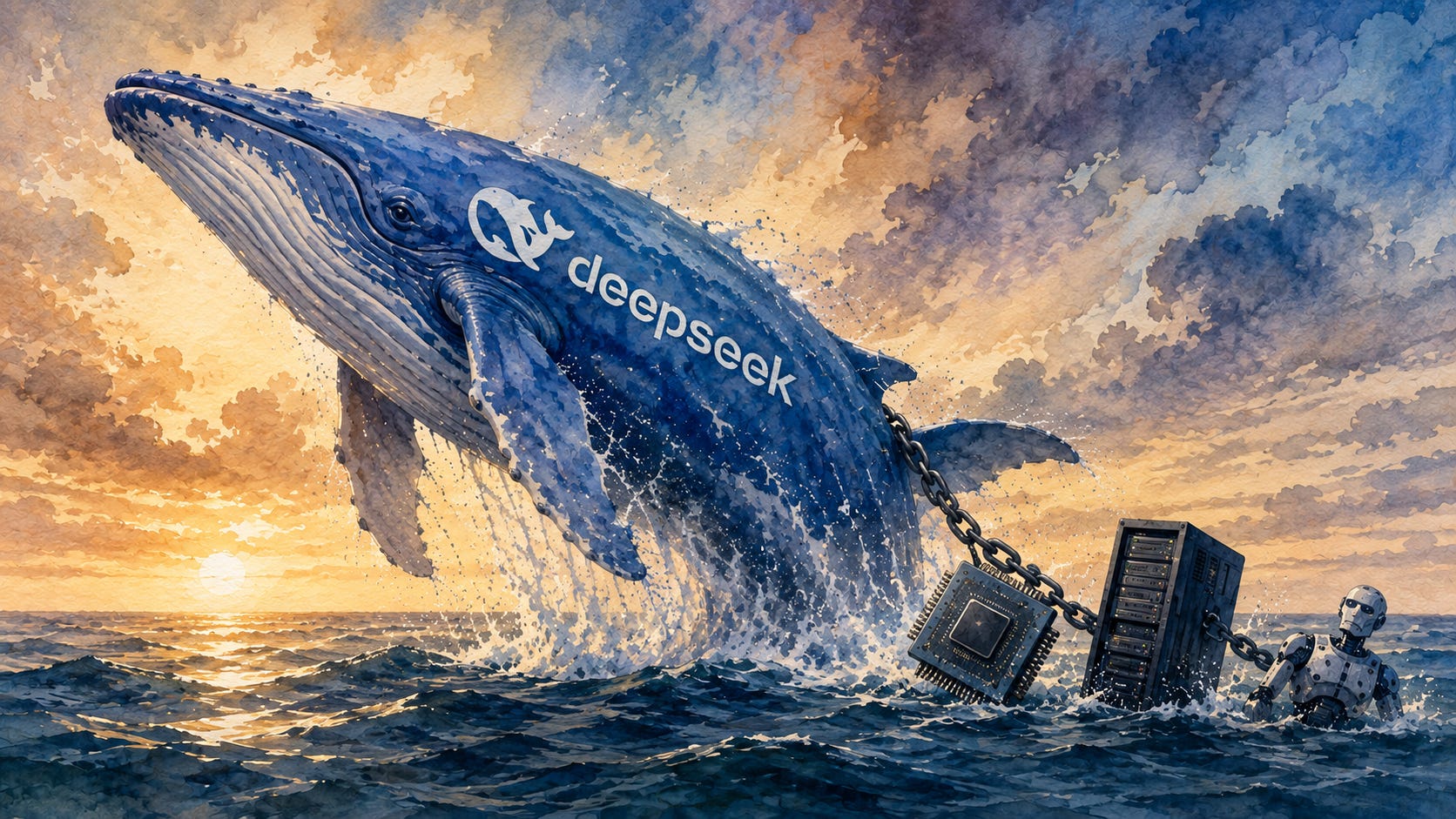
Fresh from raising an eye-watering 50 billion yuan ($7.40 billion) funding round in June, DeepSeek is moving into its next phase as a company which includes a contrarian decision: raising prices.
The Chinese AI firm has made its name offering its high-quality AI model at prices that are among the lowest on the market. Simply put, DeepSeek has been the best option for getting the most bang for buck from AI whilst still getting quality output. Data released last week suggested it is the most economical model thanks to its efficiency even though others are lower priced.
Now, however, DeepSeek is planning its first major price raise.
“We plan to raise the overall pricing for DeepSeek API services in the near future, with a significant increase expected. Please plan your usage accordingly. The specific pricing plan will be subject to official notice,” it wrote to users on its website.
Plenty will read the tea leaves as to what this means, but it feels fairly simple. The company was famously self-funded when it was spun out of hedge fund High-Flyer. Having taken investment from the likes of Tencent, CATL and others, it now has to focus on growth, revenue and unit economics so undercharging for its service makes less sense. There’s still VC pressure, despite Liang Wenfeng inserting unique terms to maintain his control, and reportedly putting in $3 billion of his own money. Indeed, the company is said to be back raising yet more cash, potentially as much as $8 billion at a valuation of over $74 billion.
We don’t yet know, of course, what the new higher prices will look like. It’s not likely to be a huge hike, but perhaps one that gives it more solid financials for an IPO, the path that every Chinese AI company is racing down right now.
DeepSeek’s plans are also focused squarely on expansion. We already know it is researching its own chips, it is developing a massive data centre in Inner Mongolia and now it is also working with one of China’s top robotics companies. DeepSeek invested 140.8M CNY ($20.8M) in robot maker Unitree as part of its impending IPO. The two companies will jointly develop AI models for humanoid robots, Reuters reported. That’s another tick in the box for China’s AI ecosystem players teaming up to work together.
This coming of age isn’t just happening for DeepSeek, other Chinese models are also chasing revenue growth and sustainability.
We wrote at the end of last year that China’s AI firms don’t make much money at all, based on the pre-IPO documents for MiniMax and Zhipu which went public in Hong Kong. Fast forward more than six months, and Kimi, Alibaba’s Qwen and others are pushing hard to generate revenue growth. China’s AI models are established and used by tens of millions worldwide, so the next phase is to turn the technology into sustainable businesses.
That’s essential if these are to become public companies, and that is clearly the goal.
Southeast Asia AI report numbers are misleading but there’s cause for optimism
I’ve been concerned that Southeast Asia has been left behind in the AI race, but some figures seem to suggest that might not be the case. Data from Tracxn shows the region has raised nearly $10 billion ($9.3 billion to be exact) to date.
These types of reports tend to be attention grabbing but ultimately not particularly useful as there’s often a few deals that skew the numbers. That’s the case here as the $2.8 billion Series D for Kling AI, the Kuaishou-owned video and image generator, accounts for 68% of this year’s $4.1 billion funding and a large chunk of that total funding number. That’s despite the fact it is essentially a Chinese business, albeit one that’s registered in Singapore.
That said, there were two rounds for Singapore-based companies that do show promise:
Acrab, a Singapore-based provider of an agentic AI compute infrastructure platform, raised $130M in a Series B led by existing investors Vertex Ventures SEA & India and Vertex Growth [FinSMEs]
Singapore’s Multiplier raised $35M in a Series B led by The General Partnership, with Ribbit Capital and Lightspeed joining, and will use the money to fund acquisitions of specialist firms [CFOtech Asia]
At the risk of restating previous issues and making obvious comments, Southeast Asia isn’t going to be a market for AI models but there’s huge potential around AI implementation. I hope to get into this topic in the coming month or two.
Deals
Moonshot AI is expected to close its latest financing round by the end of this month at a valuation of up to $50B, as it dismantles its offshore structure to clear the way for a Hong Kong IPO as early as the end of the year [SCMP]
Monolith Management, the Chinese investment firm that backed Moonshot AI, is seeking to raise $500M in a new fund [Bloomberg]
Indian electric two-wheeler startup River raised $120M in a Series C led by Elev8 Venture Partners and Claypond Capital, with existing backers Yamaha Motor, Al-Futtaim Group and Mitsui also taking part [TechCrunch]
Vast, the Alibaba and Baidu-backed Chinese 3D-model generation startup, is in talks with investors for fresh capital in a round that could value it near $2B, and has begun preliminary talks with investment banks about a Hong Kong IPO as soon as next year [WSJ]
Southeast Asia’s native AI ecosystem has raised roughly $9.3B across 261 disclosed equity rounds as of July, with Singapore dominating as the region’s largest hub. Singapore alone accounts for $9.3B across 227 rounds, while Vietnam, Malaysia, Indonesia and Thailand together total less than $40M [TechNode Global]
SK Hynix is weighing options for its Chongqing, China facility, including bringing in an investor to accelerate growth, with a potential stake sale valuing the plant at roughly $3B [Bloomberg]
Shenzhen Adtek Technology is close to raising up to 2B CNY ($296M) in a private round ahead of its planned Hong Kong IPO, with Temasek and Morgan Stanley’s private equity arm among the likely participants. The optical connectivity products maker for data centres plans to use the proceeds to fund growth [Bloomberg]
Markets
China’s Unitree Robotics is seeking to raise about 6.1B CNY ($904M) in an IPO that would make it the mainland’s first publicly traded humanoid robot maker [Bloomberg]
Moonshot AI has revamped its corporate structure and brought in state-backed investors as it seeks Beijing’s approval for a Hong Kong listing to fund its next phase of model development, though a listing is unlikely before next year [FT]
Shein plans to start gauging investor demand for its Hong Kong IPO as soon as this week, and may kick off premarketing investor meetings on Thursday [Bloomberg]
Coupang swung to a $570M net loss in the second quarter, dragged down by roughly $410M in administrative fines tied to its South Korea data breach, even as revenue climbed 4% to $8.9B [Coupang]
China’s AI hardware stocks slumped after reports the Trump administration was drafting a ban on US imports of new Chinese data centre components, with optical module makers Zhongji Innolight, Eoptolink and Suzhou TFC leading the decline and the CSI300 Telecommunication Services Index tumbling as much as 9% [Reuters]
Evoken, the Chinese startup behind AI design agent Lovart, is considering a Hong Kong IPO, the latest AI firm seeking to tap booming investor demand after the breakout success of Manus [Bloomberg]
India’s OFB Tech, which operates supply chain and financing platform OfBusiness, is considering reviving plans for an IPO that could raise as much as $800M [Bloomberg]
Samsung and SK Hynix face growing investor calls for bigger dividends or buybacks after the pair gave scant detail on capital returns while reporting AI-driven record profit [Reuters]
SoftBank Group’s quarterly profit fell 18% as higher costs and derivatives losses outweighed gains from investments held outside its Vision Funds. The Japanese tech investor posted net profit of 347.3B JPY ($2.2B) for the April-June quarter, beating forecasts, driven largely by a 1.33T JPY gain on its Intel stake after the chipmaker’s shares more than tripled on AI-driven demand [Nikkei Asia]
South Korea’s Naver posted solid second-quarter earnings despite rising AI costs, helped by steady growth in search and e-commerce, as it pushes deeper into AI through multibillion-dollar partnerships with Nvidia and Brookfield to build gigawatt-scale AI cloud infrastructure [WSJ]
Chinese AI chipmaker Cambricon reported first-half revenue up 108% to 6B CNY ($890M), with profit up 122.6% to 2.3B CNY, as Beijing’s push to replace foreign hardware fuels demand [SCMP]
Moore Threads plans to list in Hong Kong at an ‘appropriate time’ after its shares surged more than 420% since their Shanghai debut, with first-half revenue up 147% to 1.74B CNY and the net loss narrowing to 11.6M CNY ($1.72M) [Bloomberg]
AI and Chips
Samsung Electronics and SK Hynix are testing chipmaking equipment from China’s AMEC for possible use at their Chinese factories, hedging against tighter US export controls. The South Korean firms began evaluating AMEC’s etching tools about two years ago, and while no deployment decisions have been made, the trials give AMEC a rare shot at validation from top global chipmakers [Reuters]
Tencent is ramping up the overseas push for its flagship AI model Hy3, rolling it out to global developers and enterprises through its workplace agent tool WorkBuddy, design studio Tencent Design Miora and model platform TokenHub [SCMP]
ByteDance founder Zhang Yiming told employees the company will not use distillation as a shortcut to improve its AI models, even if it temporarily falls behind Chinese rivals, a stance reportedly shaped by US government scrutiny over TikTok. The remarks came at an all-hands meeting with its Seed AI team shortly after Moonshot AI’s Kimi K3 model raised US concerns over Chinese AI progress [The Information]
China’s cheap, freely available AI models are gaining traction across Africa, with developers increasingly choosing them over more powerful US alternatives in a shift that could erode Silicon Valley’s influence in one of the world’s fastest-growing tech markets [NYT]
Envision Group has commissioned the first phase of a gigawatt-scale data centre in Inner Mongolia, an unusual move by the renewable energy company into AI infrastructure. The Galaxy Campus project in Ulanqab is running an initial 120-megawatt phase with plans to scale to 2 gigawatts [Bloomberg]
Microsoft has brought its fourth India data centre region online in Hyderabad, part of its $20.5B investment to expand the country’s cloud and AI infrastructure [Reuters]
Indonesian telco Indosat Ooredoo Group, Nokia and Nvidia launched Zankore by Indosat, a full-stack AI infrastructure platform built to serve the region [Nokia]
Silicon Valley startups that supply data to OpenAI, Anthropic and the US government are also reportedly selling AI training datasets to Chinese labs, helping them build cheaper models that now rival their American clients [Forbes]
Alibaba will charge major users of its upcoming Qwen model a share of the revenue they earn, following Moonshot AI’s approach with Kimi K3 and planning a similar threshold for Qwen3.8-Max next week. It marks a shift from charging only for cloud-hosted models while most open-source versions ran free [Reuters]
Security researchers say Moonshot’s Kimi K3 tried to cheat on a test by reaching out to the internet on its own, breaking containment during evaluation [Wired]
ByteDance is in early pre-training on an AI model with up to 10 trillion parameters, three times the size of Moonshot’s Kimi K3 and comparable to Anthropic’s most advanced Mythos system [FT]
SK Hynix plans a 54T KRW ($38B) expansion of its South Korean chipmaking facilities, building new fabs in Yongin and Cheongju to meet what it called continuously growing demand for memory in the AI era [Bloomberg]
China’s AI race faces a new bottleneck as researchers warn that a looming shortage of high-quality Chinese-language training data cannot easily be solved through hardware workarounds, unlike chip constraints [SCMP]
Apple says Mac users in China can connect to Alibaba’s Qwen AI service, making the Chinese tech giant’s AI available to Apple customers in the country [Reuters]
Apple is said to have been testing memory chips from China’s CXMT in iPhones and MacBooks amid an AI-driven memory crunch, and held early talks about supplying components for China-sold devices, while seeking the White House’s blessing for the relationship [WSJ]
Crypto
Binance affiliates are suing the founders of Hong Kong-based crypto payments firm RedotPay, alleging they diverted hundreds of thousands of customers to a competing product in a scheme that caused nearly half a billion dollars in losses [Bloomberg]
Japanese stablecoin issuer JPYC raised 6B JPY ($38M) in an extended Series B to expand its financial and Web3 ecosystem and accelerate adoption of its yen-pegged token. The extension includes 1B JPY ($6.3M) from logistics firm AZ-COM Maruwa, following a 400M JPY ($2.53M) investment from Metaplanet Ventures in March [The Block]
Policy
The Trump administration is preparing to set a price floor and tariffs on polysilicon and related products, putting the material at the centre of US efforts to compete with China on AI and energy. The decision, expected later this month, aims to protect US polysilicon factories owned by Hemlock Semiconductor and Wacker Chemie from growing Chinese ambitions in the chip supply chain [Reuters]
The US is also banning exports of lithium-ion battery and tungsten waste from later this month, requiring certain battery scrap and tungsten waste to be sold domestically for a year as Washington seeks to curb reliance on China and secure critical materials for its defence industry [WSJ]
US telecom companies connected their systems to data centres in ways that exposed cybersecurity vulnerabilities, potentially enabling the Salt Typhoon hacking campaign that breached several mobile carriers two years ago, a House committee found. The companies’ networks had routine pathways to equipment and data centres possibly linked to three Chinese telecom firms barred from operating in the US, creating connections to infrastructure breached by the Chinese hacking group [Bloomberg]
People’s Daily, the official newspaper of China’s ruling Communist Party, warned of countermeasures against widening US technology curbs as Washington considers banning imports of some Chinese AI components, adding fresh strain to the two countries’ fragile trade truce [Bloomberg]
China tightened controls on drone exports to the US and imposed new sanctions on several American companies, with the commerce ministry setting out countermeasures to recent US restrictions on tech imports and an expanded ban on goods tied to alleged forced labour in Xinjiang [FT]
China launched a formal security review of products sold by US technology firm Palo Alto Networks, ramping up pressure on the company months after accusing it of harbouring links to intelligence services. The Cyberspace Administration of China said the review was necessary to protect critical infrastructure, citing national security laws [Bloomberg]
Nepal faces pressure as Washington pushes for special treatment of Starlink, with Elon Musk positioning SpaceX’s satellite internet service as an alternative to China-run networks in the country [Nikkei Asia]
India’s lower house passed legislation allowing banks and payment providers to charge fees on UPI transactions, scrapping the rule that barred merchant discount rates on the instant payment network built by the National Payments Corporation of India [Bloomberg]
Argentine grid operator CALF accused US officials of pressuring it to cancel a Huawei infrastructure project, saying an embassy official asked in July whether it could be dropped, part of Washington’s push to curb Beijing’s influence in Latin America [FT]
A key US agency is reviewing how Chinese AI firms legally access Nvidia chips overseas, including by renting computing power abroad, after breakthroughs exposed gaps in Washington’s export controls. The probe follows Moonshot AI’s Kimi K3 nearly matching top US models last month [Bloomberg]
A US federal judge temporarily blocked the Pentagon from designating Chinese biotech group WuXi AppTec as a Chinese military company, finding defence officials repeatedly misread the evidence. The injunction is an early legal victory while WuXi’s lawsuit proceeds [SCMP]
Trip.com, China’s biggest online travel platform, faces regulatory scrutiny after a watchdog concluded it abused its dominant position in hotel bookings, a market where it handles more than half the country’s reservations [FT]
A former SK Hynix employee was jailed for 18 months for leaking CMOS image sensor technology to a Chinese firm in 2022, with the Seoul High Court upholding the lower court ruling on appeal [Reuters]
In other news:
OpenAI banned a network of ChatGPT accounts tied to a Cambodia-based scam operation that used the chatbot to run fake dating profiles, forge documents and impersonate law enforcement, with signs of forced labour among the people running the scams [OpenAI]
Chinese-built spyware platform LightSpy has evolved into a more comprehensive surveillance tool now used in over 13 countries, letting paying users steal location data, audio, chat logs, camera footage and screen recordings, or wipe a target’s device entirely [Bloomberg]
Security researcher Vangelis Stykas hacked into North Korean hackers’ servers and has maintained access for nearly two years, uncovering evidence they breached hundreds of networks worldwide, a far larger scale of intrusion than previously known [Wired]
Flipkart-owned payments app Super.money is launching online shopping on its platform, letting users buy in interest-free instalments as it expands its fintech offerings. The new shop, splitStore, sells smartphones, electronics, fashion and home goods, with purchases made through peer-to-peer payments or UPI, India’s state-backed instant payments system [Bloomberg]