


Welcome back to Asia Tech Review, your curated digest to keep up to date with tech news across Asia.
I’m still traveling in Europe, but Asia is where the action is right now. Chinese memory giant CXMT is about to go public in Shanghai in an IPO that will raise nearly $10 billion and flex China’s tech self-sufficiency strategy. Meanwhile, Korean firms are splurging the cash they’ve raked in from AI on deals in the US and beyond. That’s our first stop in today’s newsletter.
To keep up with our issues, follow us on LinkedIn or WhatsApp. Please do share Asia Tech Review with people you know who want to get smart about Asia tech.
South Korea’s AI earnings are financing a raft of global deals
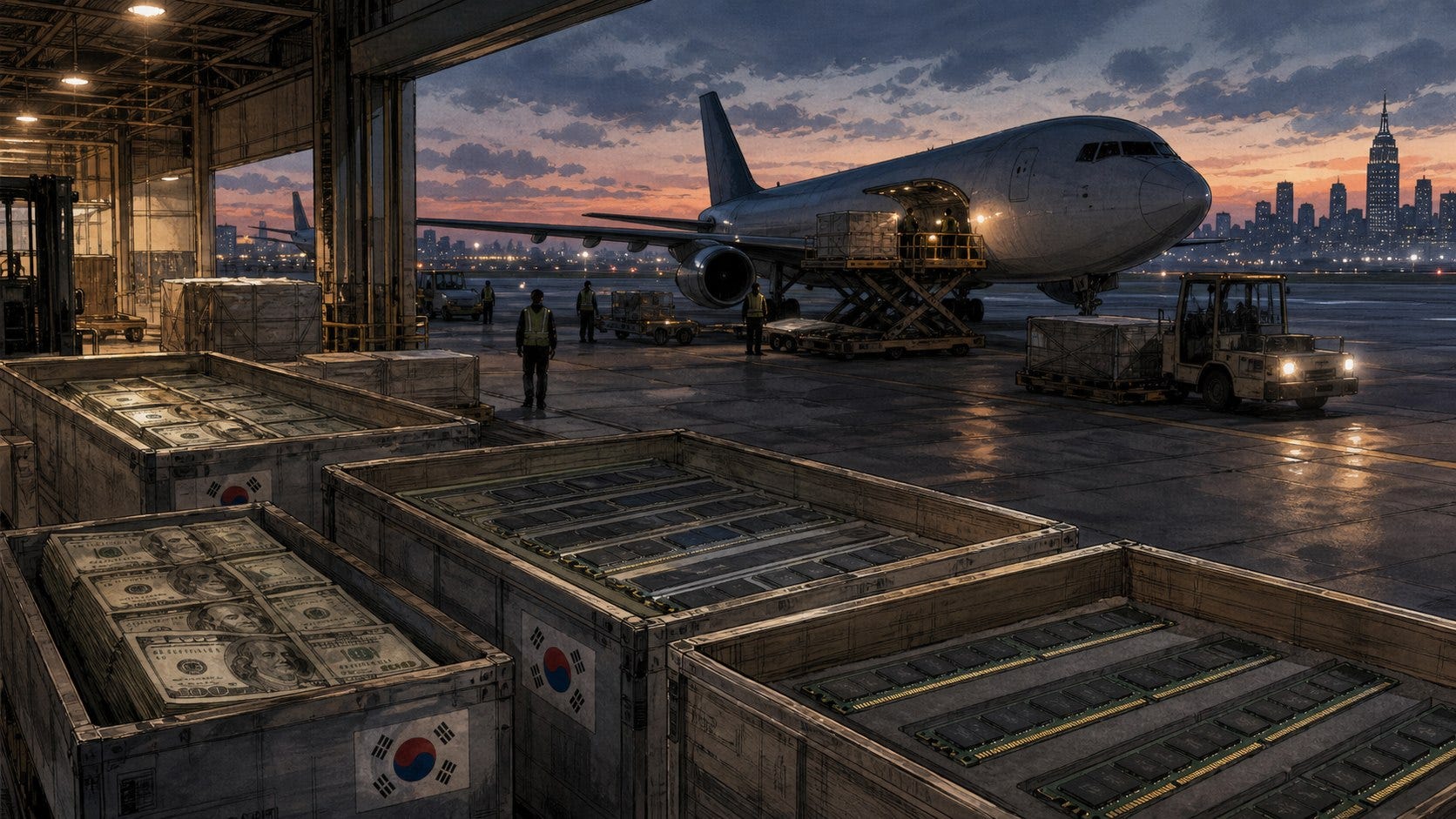
South Korea has been a major economic beneficiary of the AI boom. Now that financial windfall is touching other countries and companies across the globe through a series of deals.
Samsung, which has posted record results thanks to its surging memory business, is said to be in talks to invest in Mistral in a deal that could value the French company at €20 billion, or $22.8 billion, according to the Financial Times. Arguably Europe’s most prominent AI firm, Mistral develops a model that ranks among the world’s top ten based on usage through OpenRouter.
Mistral has been making inroads in Asia. It has accelerated hiring in its Singapore office, which opened at the beginning of last year, with a focus on winning business in the public sector and financial services. In Europe, it just struck a deal with Microsoft to help it scale its distribution through Azure. A deal with Samsung can give it an edge in Korea, and maybe other countries, by virtue of it being neither American nor Chinese.
Elsewhere, the FT also reported that Korean firms are using their cash piles to grow their production capabilities in the US:
Foreign direct investment executed by South Korean groups in the US during the first quarter more than doubled year on year to $10.2bn, the highest in nearly five years, according to the finance ministry in Seoul. It rose nearly 15 per cent to $25.7bn for the whole of 2025.
We know SK Hynix has committed tens of billions of dollars to building out its US presence, it also created a service business on American soil and has pledged to invest $10 billion into innovative US companies. Samsung, meanwhile, backed AI data-centre cooling startup ZutaCore as part of a recent $100 million round and it backed AI chipmaker Groq last year.
The deals make sense as investments in the future and new possibilities for the Korean duo, which sit on the frontier of AI technology, but also they provide a new source of capital after China’s M&A was effectively snuffed out. Deals like ByteDance’s $1 billion acquisition of Musical.ly in 2017 or Tencent’s purchase of Riot Games in 2015 were from a different era, but no other nations have stepped in to fill the gap.
Korea’s moves are going the other way, too.
President Lee Jae Myung visited Silicon Valley to actively court tech companies to explore partnerships and deals as he continues to make AI the centrepiece of his vision for the future, which includes an $880 billion investment plan. He is also hoping to encourage US investors to back Korea’s emerging tech firms.
The major deals include Nvidia and SK Group announcing a $500 billion initiative around AI data centres and memory, while Nvidia will invest $1 billion in Naver to help finance a South Korean AI data centre being developed with Brookfield. The goal is to allow Naver to more than triple the facility’s size and use Nvidia AI computing hardware.
As the summer ends, look for more deals that bridge Korea and the US. I’m particularly interested in seeing how SK Hynix, a name that wasn’t widely-known before this year, cashes in on its new found status with startup investments in the US.
Memory giant CXMT on the cusp of blockbuster China IPO
ChangXin Memory Technologies (CXMT) will list in Shanghai today following China’s second highest IPO in history, which raised 66.6 billion CNY ($9.8 billion).
Like SK Hynix and Samsung, CXMT is ideally placed to profit from the AI boom as it develops the memory chips required for AI servers, as well as regular technology like smartphones. The company is the world’s fourth largest manufacturer of DRAM, dynamic random access memory, and the largest in China, which makes it a key player in the domestic push for technology self-sufficiency.
Indeed, CXMT is key to developing China-made data centres that can work with Chinese AI chips and models to give a fully independent tech stack.
Now though, China’s memory chip challengers are turning the AI hardware squeeze into leverage.
CXMT reportedly raised prices, even for major names like Huawei and signed major supply deals with ByteDance and Tencent. With revenue in Q1 increasing 719% to reach $7.5 billion, CXMT is on a roll.
Its IPO will be a major milestone for Beijing.
Outside of the self-sufficiency strategy, a major float is proof that the long-term and government-funded approach to building CXMT can be replicated, whilst generating significant returns for investors.
Deals
Embedded AI startup PsiBot, also known as Lingchu Intelligence, is set to close nearly $100 million in funding at a $1.48 billion valuation [Bloomberg]
Grab made a strategic investment in Vietnamese EV charging company EBOOST, with plans to deploy more than 6,000 charging ports for cars and motorbikes in Vietnam by early 2028 [TechNode Global]
Mirae Asset completed its acquisition of a 92.06% stake in South Korean crypto exchange Korbit for about $93 million [The Block]
ServiceNow invested $40 million in Indian banking software firm BusinessNext at a $700 million valuation [TechCrunch]
Singapore robotics data infrastructure startup Ropedia raised $22 million in Pre-Series A funding, taking total funding to $30 million [TechNode Global]
SoftBank is said to be weighing an acquisition of European robotics startup Gravis Robotics as it pushes deeper into AI-powered robotics [Bloomberg]
Bain Capital and LY Corp. are weighing a higher joint bid for Japanese online marketplace Kakaku.com, escalating a bidding war with EQT after Kakaku.com shares rose nearly 60% this year and lifted its market value to about $3.9 billion [Bloomberg]
Monk’s Hill Ventures is restructuring its leadership and operations as the Singapore VC shuts its Indonesia office and consolidates its investment team in Singapore [DealStreetAsia]
Markets
JD.com received formal notice of EU regulatory concerns over its $2.5 billion bid for German electronics retailer Ceconomy, a move that could require concessions to secure approval [Reuters]
Tencent’s share price fell the most in over a year, dragging Chinese gaming stocks lower as investors grew concerned about its mobile gaming business and some funds rotated back into AI-related names [Bloomberg]
Chinese robotics company AgiBot is said to be pursuing a Hong Kong IPO and has hired Citic Securities, CICC and Morgan Stanley as sponsors [SCMP]
Semight Instruments is considering a second listing in Hong Kong after shares in the Chinese semiconductor test-instrument maker surged roughly 2,200% since its April debut [Bloomberg]
Indonesia’s Danantara has taken control of four state-owned investment managers overseeing a combined 170 trillion rupiah ($9.5 billion) in assets, creating the country’s largest asset manager [Business Times]
Chinese GPU maker MetaX confidentially filed for a Hong Kong listing and is reportedly targeting an IPO by the end of this year [SCMP]
AI and Chips
The US is scrutinising China’s global AI push, with officials examining how Beijing is spreading its models and warning that foreign models found stealing American IP could face sanctions, though Chinese models already account for nearly 60% of US company token usage on OpenRouter [Bloomberg]
Almost 200 Silicon Valley companies, including Proton and Y Combinator, urged the Trump administration not to cut off access to Chinese open-weight AI models [Politico]
Nvidia CEO Jensen Huang said China’s open-source AI models pose no threat to the US but efforts to ban them do [Axios]
White House science adviser Michael Kratsios accused China’s Moonshot of improperly using US AI models and Nvidia GB300 chips accessed in Thailand to build its Kimi K3 system [Bloomberg]
But OpenAI president Greg Brockman said he is unsure if Moonshot AI’s Kimi K3 was distilled from OpenAI technology [Bloomberg]
TCS acquired land parcels in Vizag and Pune that could become sites for OpenAI’s first Indian data centres [Economic Times]
Wistron opened a $700 million facility in Fort Worth, Texas, to produce Nvidia superchips [WSJ]
Volkswagen’s China-based joint venture Carizon is expanding its partnership with Horizon Robotics to accelerate advanced self-driving development [WSJ]
TSMC’s US manufacturing push is increasing costs and squeezing margins as the chipmaker commits $200 billion to American facilities, with overseas fab expansion expected to dilute gross margins by 2 to 4 percentage points over the next several years [CNBC]
Alibaba’s mapping unit Amap unveiled an upgraded ABot robotics framework that combines five specialised foundation AI models for navigation, manipulation, reasoning and control, claiming a 92.9% outdoor navigation success rate using standard cameras and basic road networks [SCMP]
DeepSeek founder Liang Wenfeng said in a rare four-hour investor talk that China’s AI gap with the US is mainly compute, not talent, while arguing open source and restrained profits are central to DeepSeek’s AGI strategy [Inside China]
Crypto
Coinbase is expanding its Singapore operations and plans to grow local headcount to 200 despite global restructuring [Business Times]
Crypto exchange HTX has been rotating wallets across four blockchains to dodge sanctions screening since UK authorities sanctioned the platform in May, according to TRM Labs, which said the platform retires hot wallets and funding addresses every few hours across TRON, Ethereum, BNB Smart Chain and Solana [The Block]
Circle is partnering with South Korea’s Kakao and Toss to explore USDC-powered blockchain payment infrastructure and digital asset services, expanding the stablecoin issuer’s push into one of Asia’s most active retail crypto markets [The Block]
In other news:
China started issuing robotaxi permits again in some cities after a months-long freeze triggered by a Baidu robotaxi outage in Wuhan, with regulators resuming licences gradually after an industry-wide safety review [Bloomberg]
Delhi High Court ruled in favour of OpenAI in a copyright lawsuit brought by Indian news agency ANI, finding that OpenAI’s use of ANI content to train ChatGPT did not amount to copyright infringement [Reuters]
Amazon is being investigated by the US Senate Small Business Committee for allegedly letting China influence the company’s online marketplace [Bloomberg]
Taiwan has loosened foreign-ownership rules for satellite operators, potentially opening the door for Starlink and other low-Earth orbit internet services as Taipei looks to strengthen communications resilience in a crisis [Nikkei Asia]
Flipkart is preparing to enter India’s fast-growing food delivery market with a Bengaluru pilot, taking on Zomato and Swiggy as competition heats up in the category [Business Standard]
Vietnam is weighing a ban on children under 16 posting, commenting or reacting on social media, with a draft decree that would require parents to register and monitor accounts while platforms identify young users and restrict access [Bloomberg]
India’s cybercrime agency directed GitHub to take down Jack Dorsey’s Bluetooth messaging app Bitchat over concerns it could be misused by anti-national elements, sparking legal debate over the government’s power to block repositories [TechCrunch]
Tencent fired a WeChat manager after screenshots of his multimillion-yuan compensation package leaked online and sparked public backlash, highlighting how sensitive pay transparency and internal-data controls have become for Chinese tech companies [SCMP]