


Welcome back to Asia Tech Review, your curated digest to keep up to date with tech news across Asia.
It feels like a long time ago when Shein was valued at $100 billion, and now more than four years later it is finally set to go public at a much discounted valuation of less than $30 billion. But an exit is better than no exit. We also have details of a Japanese startup that’s helping make fusion power part of the electricity grid.
To keep up with our issues, follow us on LinkedIn or WhatsApp. Please do share Asia Tech Review with people you know who want to get smart about Asia tech.
For news as it happens, follow ATR Bulletin, our real-time news site that keeps you in the know.
Shein finally finds a stock market home in Hong Kong
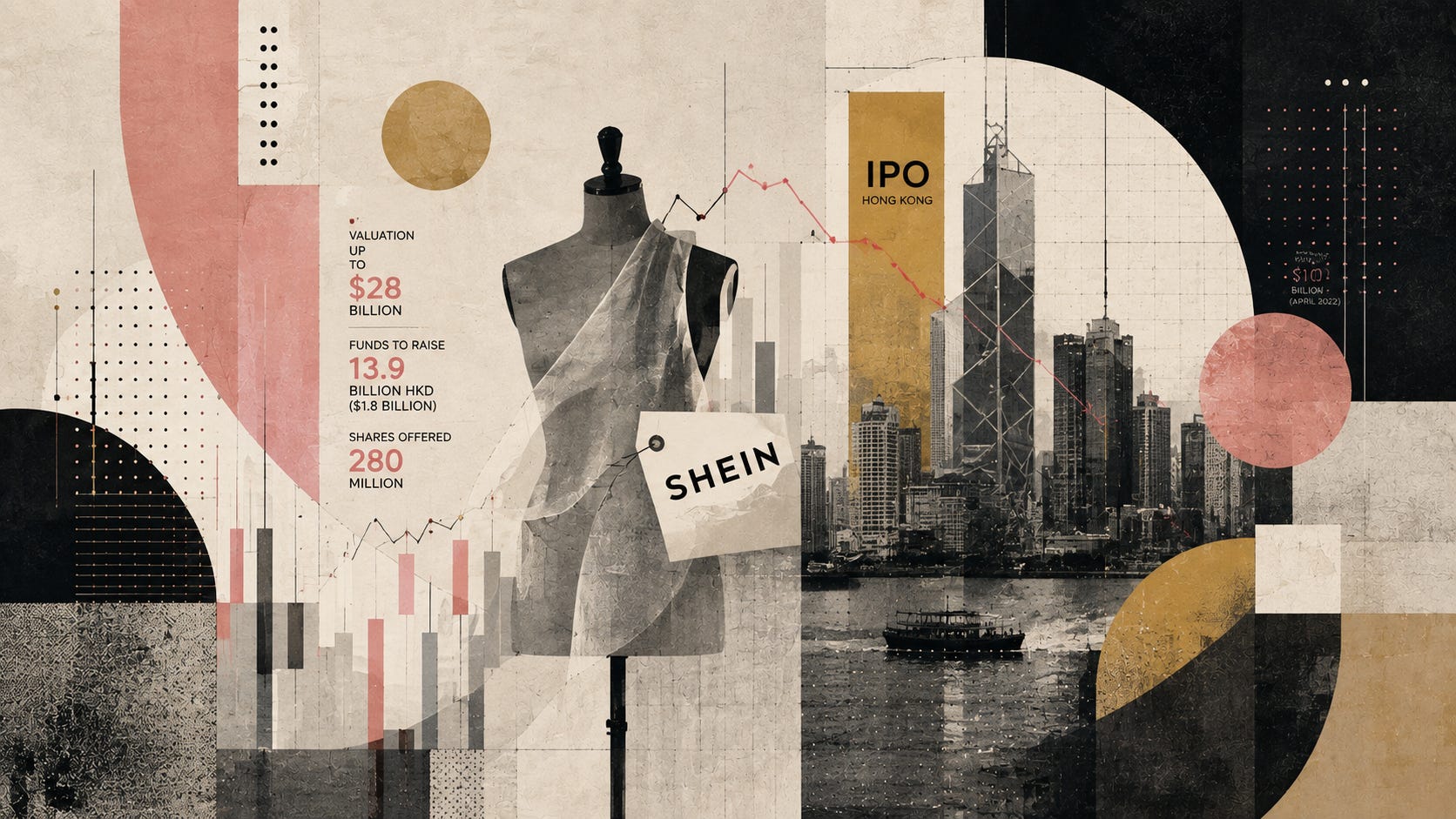
Shein’s IPO in Hong Kong looks good to go and the company will begin trading on September 1 at a valuation of up to $27 billion.
The listing is set to raise as much as 13.9 billion HKD ($1.8 billion), according to a stock market filing that shows the company will offer 280 million shares priced between 47.60-49.50 HKD. It’s been reported that Shein has dabbled with including cash payouts and additional shares for investors who previously backed it at a higher valuation.
This IPO valuation is a big deal for a fashion business, but significantly below the $100 billion that Shein was valued at when it last raised venture capital in April 2022. It puts it some way from the world’s top fashion and apparel companies, which include LVMH ($266 billion), Hermès ($167 billion) and Uniqlo ($146 billion).
Shein is backed by investors that include General Atlantic, HSG (formerly Sequoia China), Boyu Capital, Tiger Global and Tencent.
Shein had a tough time trying to go public in the US and then the UK in recent years as regulators pushed back. It was locked out of India, too, but it returned in 2025 after a five year absence through a partnership with conglomerate Reliance.
The firm’s trajectory was hit hardest when the US removed the ‘de minimis’ exception for tax on items valued less than $800, and the EU followed. These changes made importing to these key regions significantly more expensive for Shein and rivals like Temu, Alibaba and TikTok, and that continues to impact its financials.
“Shein’s IPO prospectus shows it swung to a loss of $99 million in the first quarter of 2026 from a $395 million profit a year earlier, while revenue has also been declining,” Bloomberg reported.
There might yet be more intervention as US authorities are reviewing Shein’s $80 million acquisition of Everlane, the US-based sustainable online fashion brand, which was announced earlier this year. Shein voluntarily initiated the review, according to another Bloomberg report. That is typically done before a deal closes, but there’s no indication that the deal will be undone at this point.
Shein’s investors may not be getting their huge payday, but they will have a partial exit opportunity. Shein, as a public company, will be able to use public markets to grow its business and value. Hong Kong has had plenty of exposure to AI investments and Shein might be an option for those seeking diversification.
Related: Shein rival PDD, which operates Temu, said it missed its earnings target due to tough competition in China and global regulatory pressure. What a time to go public, indeed.
Kyoto Fusioneering raises $162 million to bring fusion power to the grid
We don’t often hear about deep tech companies growing from Asia but Japan’s Kyoto Fusioneering is just that. It announced it raised $162 million across a mix of equity, credit and loan facilities to scale its infrastructure business to enable fusion power to become mainstream.
Founded in Japan, as the name suggests, Kyoto Fusioneering develops equipment for commercial fusion power plants. That’s not to be confused with nuclear power, which uses fission, or splitting atoms. Fusion power instead combines small atoms into large atoms, with fewer environmental concerns like radioactive waste or meltdown risk.
Fusion is, however, experimental, but Kyoto Fusioneering is taking a strong position in being a key enabler when it becomes ready for the power grid. The company provides infrastructure that includes plasma-heating, fuel-cycle and heat-management systems, and its operations span Japan, Germany, the UK, Canada and the US. TechCrunch recently looked at Unity-3, the newest prototype it is developing to test breeding blanket technology used to generate tritium fuel and validate data for fusion reactor developers.
Kyoto Fusioneering has raised 32.98 billion JPY ($207 million) to date from the likes of the Development Bank of Japan, East Japan Railway Company, MM Japan Korea-Japan Fusion Fund and venture capital fund Coral Capital. Kiyoshi Seko, who is President and COO of Kyoto Fusioneering, actually worked at Coral and was part of the deal before moving over to the company so there’s plenty of startup DNA in the business.
Deals
Xpeng’s robotics unit raised more than $900 million in its first funding round, valuing the business at over $6.3 billion as the Chinese EV maker pushes deeper into humanoid robots [Reuters]
Vietnamese hospitality startup M Village, now rebranded as Modern Village Lifestyle, has raised $26 million from investors including Mizuho Asia Partners and Trip.com [DealStreetAsia]
Markets
Singapore and Thailand are loosening listing rules and courting technology companies as the AI boom gives Southeast Asian exchanges a chance to reverse years of weak tech IPO activity [Nikkei Asia]
AI and Chips
August continued to be a busy month for Alibaba as Alibaba Cloud launched Wan3.0, a video-generation model that creates clips of up to 30 seconds from text and document inputs [TechNode]
ByteDance is merging its Trae coding and Coze agent-building teams into its Doubao chatbot and personal assistant app to battle rivals such as Tencent [Bloomberg]
Nexperia’s China unit plans to shift its entire product line to a domestic 12-inch silicon wafer foundry as it pursues independence from overseas supply chains [SCMP]
Xiaomi launched its Xring O3 processor for flagship devices, extending its push into in-house chip design and challenging Qualcomm and MediaTek in the Android premium market [Bloomberg]
Crypto
India will next month test tokenised corporate bonds, using blockchain technology to enable instant settlement. State-owned power financier REC will be the first issuer, putting India alongside markets including Europe and Hong Kong that are using blockchain for bond issuance and settlement [Reuters]
Policy
Taiwan prosecutors indicted nine people, including employees of Nvidia and Super Micro, over the alleged illegal export of AI servers to China [Reuters]
In other news:
Chinese state-affiliated hackers have more than doubled attacks after adopting AI models such as DeepSeek to automate tasks and develop malware, Taiwanese cybersecurity firm TeamT5 said [Bloomberg]
A 600-megawatt generation failure in Kyrgyzstan on August 14 triggered outages across Kazakhstan, Uzbekistan and Tajikistan, testing Central Asia’s effort to integrate power grids as data-centre demand rises [Nikkei Asia]