


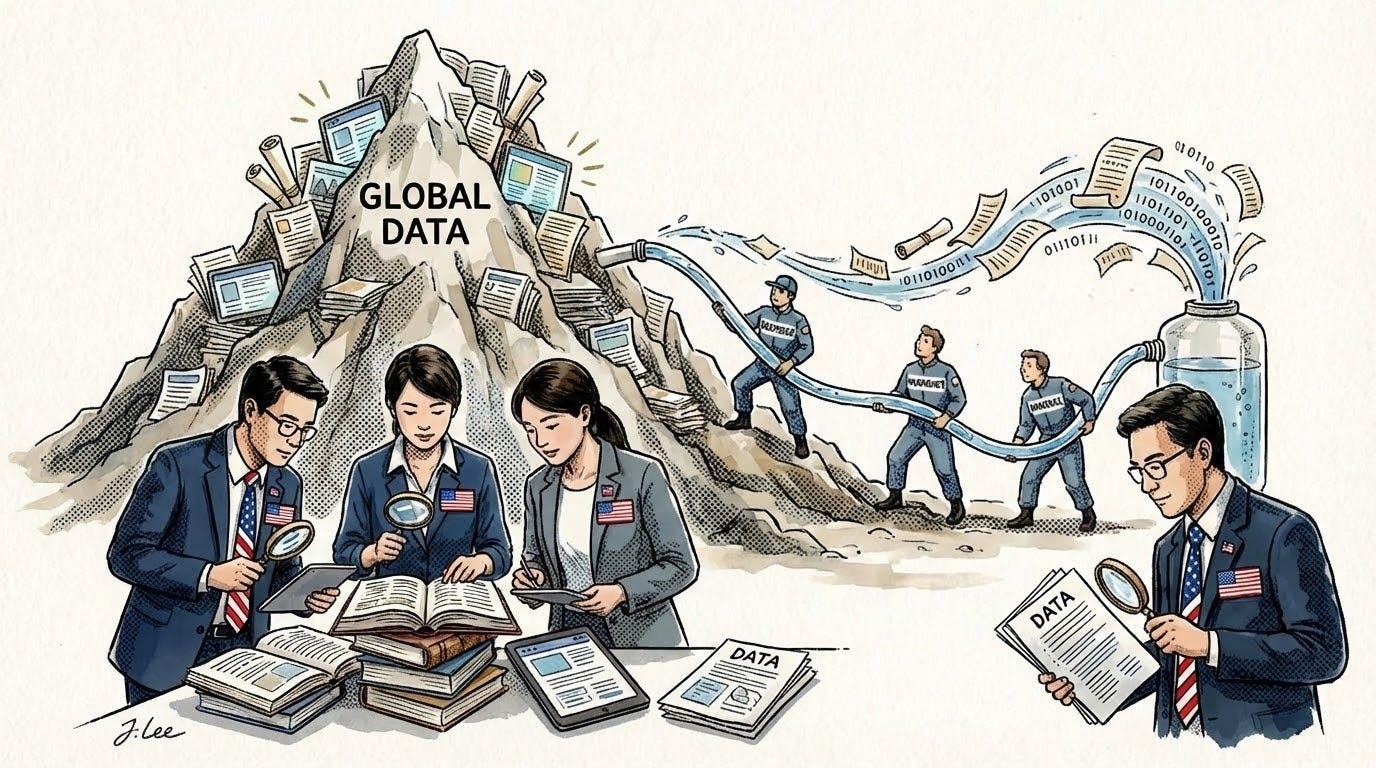
It’s rare to see companies going after their rivals publicly, but that’s exactly what happened when Anthropic called out a trio of Chinese rivals for allegedly using its Claude service to train their own AI models.
DeepSeek, Moonshot and Minimax were found to have created 24,000 fraudulent accounts that were used to develop agentic reasoning, tool usage and coding for their respective services through more than 16 million Claude interactions, Anthropic argued.
These labs used a technique called “distillation,” which involves training a less capable model on the outputs of a stronger one. Distillation is a widely used and legitimate training method. For example, frontier AI labs routinely distill their own models to create smaller, cheaper versions for their customers. But distillation can also be used for illicit purposes: competitors can use it to acquire powerful capabilities from other labs in a fraction of the time, and at a fraction of the cost, that it would take to develop them independently.
The Anthropic blog goes into some level of detail around each Chinese company’s alleged usage of Claude. As I said, this is notable for being such a direct attack on these companies. OpenAI previously warned US lawmakers that DeepSeek was distilling its product, but it communicated those sentiments in a memo rather than a more public channel.
Chinese AI firms have generally built their reputation around doing more with less. Unlike Anthropic, OpenAI and others with multi-trillion dollar budgets, they’re financed more modestly and have limited access to technology from Nvidia and others which is key to training large-scale models.
The idea that they are reliant on their US peers undermines that narrative which China has crafted.
But the response to Anthropic’s post was mixed at best, with many pointing out that US AI services have trained on the internet, including news media, without revenue compensation for creators.
Now you can follow Asia Tech Review on WhatsApp for the day’s biggest story
This kerfuffle comes at a notable time.
The US government has just selected OpenAI as its AI platform of choice, with Anthropic seemingly overlooked after refusing to back down over a request to restrict use of its service for autonomous weapon development and US citizen surveillance.
DeepSeek, meanwhile, is poised to launch its newest model (V4) after it missed out/opted against joining the many other AI companies that launched new or upgraded services during Chinese New Year.
Already, DeepSeek V4 is controversial. It was reportedly not shared with US chipmakers like Nvidia and AMD as is customary to ensure hardware compatibility. Chinese companies like Huawei were, apparently, given access. The Trump administration, meanwhile, believes it has been trained on Nvidia’s Blackwell chips, which would be in violation of US export control.
Leaks suggest V4 will be a multi-modal model meaning it will be capable of generating images, videos and text. There are also heavy suggestions that it will be more ‘agentic’, meaning it can be used to handle tasks rather than just operating as a pure chat interface. That would be in keeping with updates from Claude and ChatGPT.
Have a great week and all the best,
Jon
Finally, a quick note on what I do outside the newsletter: I work with ambitious startups to sharpen their story, build clear messaging, and create the channels that drive growth. If that sounds useful, you can learn more at fullydrafted.com
Peak XV partners reported left after $200M demand following major IPO win
February was a rollercoaster month for Peak XV, formerly Sequoia India and Southeast Asia. It closed its first independent fund at an impressive $1.3 billion in size, but lost three partners over an internal disagreement.
Now we have more colour on exactly what went down, thanks to a Newcomer report:
Their break was precipitated by what Singh considered an outrageous demand from Agrawal: a profit share that would translate to as much as $200 million from the breakout success of fintech company Groww (similar to Robinhood), which netted the firm and its limited partners $2 billion. Agrawal had led the Groww deal, one of the firm’s biggest-ever wins.
Figuring out compensation for out-sized wins like Groww isn’t as simple as it may seem.
Deliveroo exits Singapore and Japan to cut Asia presence
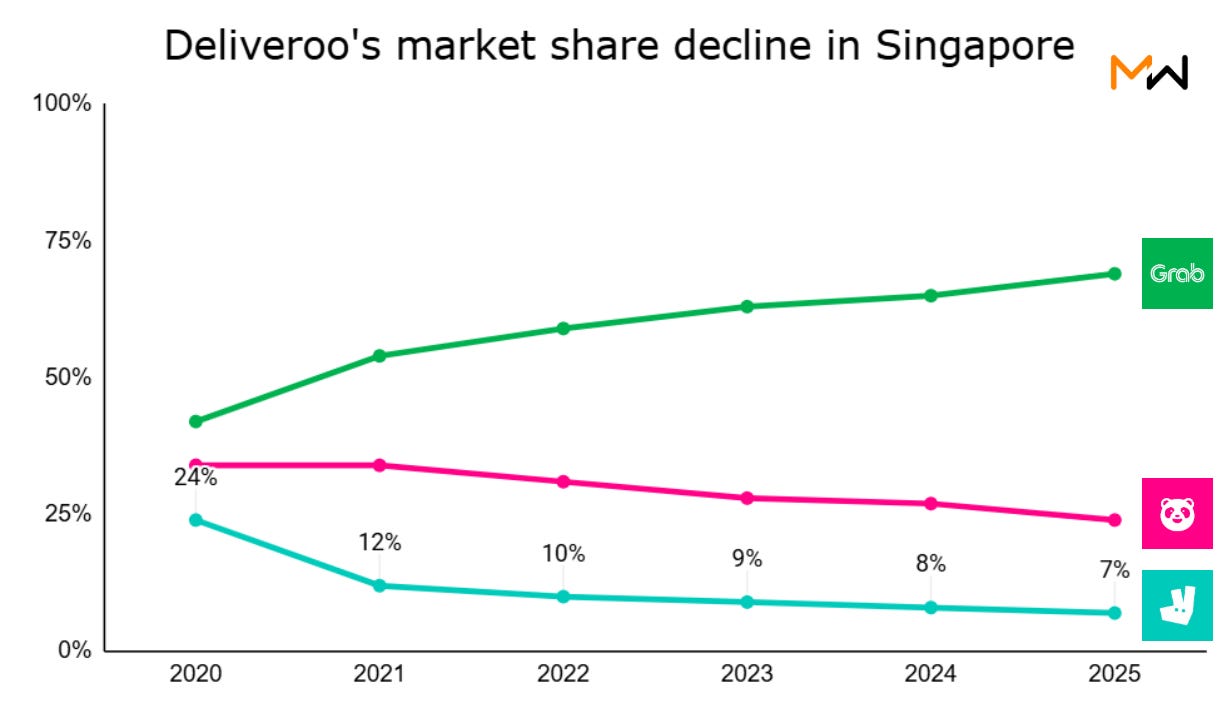
We know Southeast Asia is a tough market for food delivery and transportation given Grab’s market dominance, and another competitor has bitten the dust after Deliveroo exited Singapore and Japan. It quit the Hong Kong market in April 2025.
Deliveroo, originally British but now owned by US giant DoorDash since October, is also leaving Qatar and Uzbekistan, where its Wolt brand operates. Finally, it will close an engineering hub in Bengaluru, India, eliminating just over 100 jobs. It will retain a similar office in Hyderabad, though.
These exits are the first cost-cutting moves after DoorDash completed the acquisition of Deliveroo. It isn’t a huge surprise given the Hong Kong exit last year and Deliveroo’s market position, which has fallen behind the competition, as data from Momentum Works shows.
Foodpanda, owned by Germany-based DeliveryHero, left Thailand last year, and there’s constant speculation around its future in Asia Pacific. The region seems to be an afterthought for Western countries due to the tough competition, lower spending and more.
China
Alibaba Cloud launched a low-cost AI coding product built on Qwen 3.5 and models from Zhipu AI, Moonshot AI and MiniMax, three companies it backed with investment. The lite tier starts at just 7.9 yuan ($1.15) per month with the pro costing 39.9 yuan ($5.80) link
Honor unveiled its first in-house humanoid robot and a so-called “robot phone” at the Mobile World Congress show in Barcelona this week, as part of a $10B repositioning push around AI-driven hardware link
Tencent shut down its TiMi Montreal studio after five years without it releasing a single game link
The Pentagon is exploring AI-powered cyber tools to map China’s critical infrastructure link
OpenAI said ChatGPT refused to help a user linked to Chinese law enforcement plan an online smear campaign against Japanese PM Sanae Takaichi, and flagged romance scams targeting Indonesians and China-based accounts seeking information from US officials link
Nvidia received a US licence for a small amount of H200 exports to China link
However, Nvidia has yet to sell a single H200 AI chip to China, a US export enforcement official told lawmakers, underscoring how tightly Washington is policing advanced semiconductor shipments link
DJI is taking its fight against the FCC’s drone ban to an appeals court link
Shein founder Xu Yangtian made his first major public appearance in Guangdong praising Communist Party support, a shift from positioning as a Singapore-headquartered company as it navigates regulatory scrutiny before a potential listing link
Huawei recorded revenue of more than $127B in 2025, signalling resilience despite US sanctions link
Crypto mining firm Canaan acquired Cipher Mining’s stake in West Texas bitcoin mining projects for $40M link
General Atlantic is selling a ByteDance stake at a $550B valuation, that’s up 66% from last year’s $330B buyback and is the first such secondary deal since Washington cleared TikTok’s US sale in January link
China’s leading chipmakers are ramping up to 7nm and potentially 5nm production, with SMIC, Hua Hong and Huawei-linked manufacturers expanding capacity to meet demand from domestic AI chip developers link
The door handles of a bestselling Xiaomi EV failed and trapped its driver during a fatal 2025 crash, a report that will likely intensify pressure for China to phase out such designs link
Chinese women are turning to AI chatbots for companionship link
Baidu posted a third straight quarterly revenue decline with sales falling 4% as weakness in its core advertising business and mounting AI losses weigh on its transition link
Chinese hackers breached Pulse Secure’s VPN software in 2021, planting a backdoor that gave them access to 119 organisations worldwide including US and European military contractors link
Google disrupted a Chinese-linked hacking group known as Gallium that breached at least 53 organisations across 42 countries, targeting governments and telecom companies over nearly a decade link
India
This year will tell whether India can be a major revenue market for consumer AI, or simply one for growth. India was the world’s top market for GenAI app downloads with 207% growth in 2025, or 20% of global downloads, but just 1% of in-app revenue—that needs to change this year as promotion deals announced last year from top names run out and packages are sold on their merit alone link
The country is emerging as one of the world’s largest AI user bases, but unless it treats its vast data reserves as a strategic asset and demands meaningful returns from US tech firms harvesting it, the country risks becoming little more than a free training ground for Silicon Valley. link
Apple Pay appears headed to India with ICICI, HDFC, Axis Bank, Mastercard and Visa in talks with Apple over a mid-2026 launch with UPI support link
Meanwhile: the iPhone became India’s single most valuable export in 2025 with shipments worth about $23B, or 76% of the country’s $30B smartphone exports link
Fintech lender Kreditbee is reportedly in talks to raise $120M at a post-money valuation of $1.2B link
Creator commerce platform Wishlink raised $17.5M in a round led by Vertex Ventures Southeast Asia and India link
Cross-border B2B payments startup Xflow raised $16.6M in a Series A at a $85M post-money valuation link
Billdesk will acquire Worldline’s India payments business for $70M in equity value link
Gushwork, which helps brands acquire customers through AI platforms, raised $9M valuing it at $33M post-money link
Sify Infinit Spaces, the data centre arm of Nasdaq-listed Sify Technologies, is targeting a valuation of up to $4.2B in an IPO that could raise $407M as early as next month link
India became the world’s back office by supplying millions of white-collar workers to global companies, but now advances in AI are beginning to automate the very services that fueled its rise link
However, AI’s deflationary impact on India’s IT industry, which has never seen a decline in software exports in 24 years, will likely take years to fully materialise link
Zomato founder Deepinder Goyal raised $54M for wearable startup Temple at a roughly $190M post-money valuation link
India blocked Supabase, a popular developer database platform, from 24 February but isn’t clear why or how long it will last link
Southeast Asia
Granite Asia, formerly the Asia arm of global VC GGV Capital, launched a $150M fund alongside Singapore’s largest bank, DBS, to invest in AI-focused IPOs link
We recently wrote that Grab remains stuck as a transportation company in the eye of investors, that explains why it is betting on AI and higher-margin services like fintech to triple EBITDA to $1.5B by 2028 link
Based, a crypto ‘super app’ based on the Hyperlink chain, raised $11.5M led by Pantera with Coinbase and Wintermute among those joining link
Malaysia blocked access to LGBTQ+ networking and dating sites Grindr and Blued link
Malaysia-based digital infrastructure provider Zetrix AI raised $40M from the World Bank’s IFC ahead of plans to list its AI unit in the US this year link
South Korea
South Korea finally approved Google’s long-standing request to export high-precision map data to overseas servers, reversing a two-decade ban and clearing the way for competition in a market dominated by local mapping apps link
Startups Motif Technologies and Upstage are squaring off against conglomerates SK and LG in the race to build a national foundation model for South Korea link
South Korea’s three major broadcasters sued OpenAI, alleging ChatGPT was trained on their news content without permission link
Coupang, rocked by a major hack, posted a surprise quarterly loss as revenue rose 11% to $8.8B link
Japan
Japan will invest ¥250B ($1.6B) in Rapidus over the next two years to back 2nm chip production, taking about 10% of voting shares with the option to assume majority control in distress link
Team Mirai, a political party founded by software engineers, secured 11 seats in Japan’s legislature on a tech-first agenda including government chatbots and self-driving buses in aging communities link
Japan’s Fair Trade Commission is investigating Microsoft’s local unit over potential anti-competitive conduct tied to Azure, including whether it restricted customers from running its software on rival cloud services link
Hong Kong
Binance internal investigators found $1.7B in crypto was sent to Iranian entities despite the exchange’s pledges to crack down on crime link
Stablecoin payments firm RedotPay, which offers a crypto card and other services, is weighing a US IPO that could raise over $1B at a valuation above $4B link
Dongchedi, the auto content and trading platform spun out of ByteDance, is weighing a Hong Kong IPO to raise $1 billion to $1.5 billion as soon as this year link
StepFun, a Tencent-backed Shanghai AI startup, is weighing a Hong Kong IPO that could raise about $500M link
Taiwan
US tech giants including Apple, AMD and Qualcomm remain heavily reliant on Taiwan’s chip supply despite years of warnings that a Chinese invasion could paralyse Silicon Valley link
TSMC customers will have to wait until at least Q2 2027 for allocation for its newest N2 production technology, as long-term partners like Apple and Nvidia have gobbled up allotments for close to the next two years link
Rest of Asia
North Korea’s Lazarus hacking group was observed deploying Medusa, a ransomware-as-a-service product for which the developers take a percentage of the ransom payment, for the first time in attacks against a Middle East company and a US healthcare organisation link